
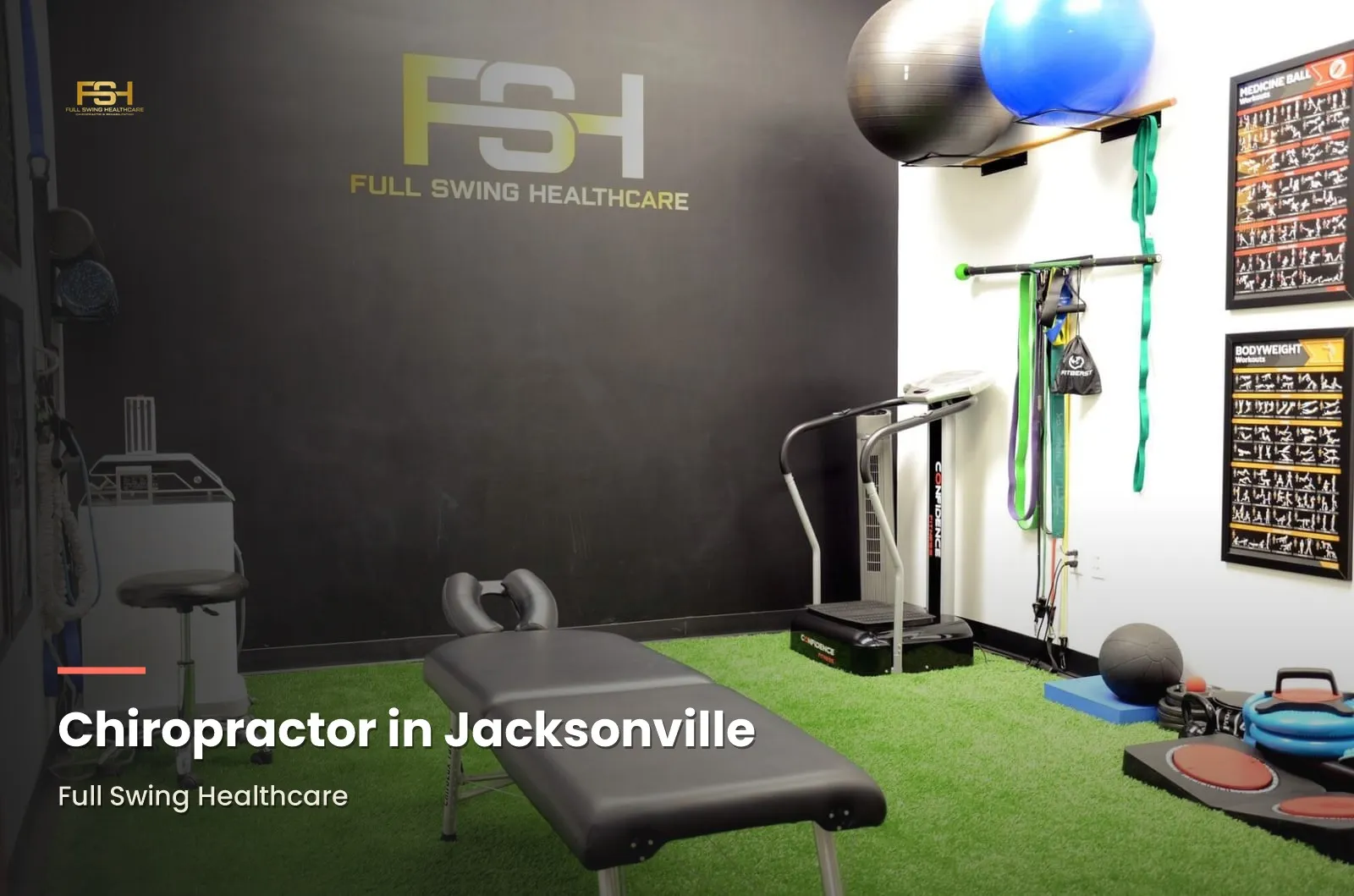
The right chiropractor in Jacksonville works out what is wrong before treating anything. At Full Swing Healthcare that means a full exam on your first visit, a plain English explanation of what we found, and a plan drawn from thirteen treatments under one roof instead of a single tool. We have worked this way since 2017.
What a chiropractor is trained to do
A chiropractor is a Doctor of Chiropractic, licensed by the state to diagnose and treat problems of the spine, the joints, the muscles and the nerves around them. Florida gives you direct access to chiropractic care, so you can book with us without a referral from another doctor, and both of our doctors hold current Florida chiropractic licenses.
The adjustment is the part most people picture, but it is only half the job. The other half is diagnosis: working out whether your pain comes from a stiff joint, an irritated nerve, an overloaded muscle or tendon, or something that does not belong in a chiropractic office at all. The treatment follows from that answer, not the other way around.
Sometimes the answer is an adjustment, and the Palmer Package of techniques we adjust with is laid out below. Just as often it is soft tissue work, needling, shockwave or rehab exercise, and now and then it is a referral out for imaging because the exam says one is medically necessary.
“We had an awesome experience at Full Swing. The staff was welcoming, professional, and made me feel comfortable the moment I walked in. Dr. Cody took the time to really listen to my concerns and explained everything clearly. The adjustments were gentle yet effective, and I never felt rushed during appointments. The office is clean, organized, and runs on time. Scheduling is super easy. If you are looking for a chiropractor who truly cares about your health and well-being, I highly recommend them. I am so grateful to have found this place.”
LT Lauren Thompson
Google review
What a chiropractic adjustment actually does
A good chiropractic adjustment in Jacksonville isn’t a five-minute crack-and-go. At Full Swing Healthcare, we figure out what’s actually going on first with a real exam, then choose the technique that fits your body and your problem. That’s how you get relief that lasts, not just a quick pop that feels nice for an afternoon.
When a joint in your spine or pelvis stops moving the way it should, the muscles around it tighten, nearby nerves get irritated, and your body starts compensating in ways that create pain somewhere else entirely. An adjustment is a precise, controlled movement that restores motion to that stuck joint. Done well, it takes pressure off the nerve, lets the surrounding muscles relax, and gives your body permission to move freely again.
The joints being treated in your spine are the facet joints, the pair of small hinges at the back of every spinal level that guide how far and in which direction that segment moves. They carry a dense supply of pain sensitive nerve endings, which is why a single stiff facet can produce pain that feels far bigger than one small joint should be able to cause. The clinical name for the whole family of treatment is spinal manipulative therapy, and the audible release you may hear is cavitation, gas coming out of solution inside the joint fluid. That sound is a by-product. It is not the goal, and it is not a measure of whether the treatment worked.
The key word is precise. We’re not cracking everything in sight and hoping something helps. Dr. Cody Muren and Dr. Eric Hall adjust the specific joint your exam points to, and nothing it doesn’t need.
“As a retired medical practitioner, I have found his techniques and knowledge outstanding. Palmer graduates are the best.”
CR Catherine Roberts
Jacksonville
The Palmer Package, which is what we adjust with
Dr. Muren trained at Palmer College of Chiropractic, the profession’s founding school, and adjusts using what Palmer graduates call the Palmer Package. It is not one technique. It is the group of adjusting systems Palmer teaches together, so that the technique can be matched to the patient rather than the patient matched to the only technique in the building.
- Diversified (manual, hands-on): the classic, precise hands-on technique for restoring joint motion, the “twist and pop” most people picture
- Gonstead: the most exacting of the group. Its whole discipline is finding the one specific segment at fault, through static and motion palpation and posture analysis, and adjusting that level alone with a contact and an angle chosen for it
- Thompson drop-table: a segmented table that drops a fraction of an inch to move a joint with far less force, ideal for sensitive areas and older patients
- Activator (instrument-assisted): a gentle, controlled spring-loaded tool for a low-force adjustment when a manual technique isn’t right for you
- Toggle recoil: a fast, very light, extremely shallow contact developed for the upper neck, where precision matters more than force
- Pelvic and extremity work: because your hips, shoulders, and feet matter as much as your spine
People are built differently, and so are their problems. A college athlete with a locked-up lower back needs something different than a grandparent with arthritic joints or an expecting mom in her third trimester. Carrying the full package is what makes that possible.
The upper cervical spine, the top two segments where the skull meets the neck, gets adjusted here both by hand and with the Activator, depending on what the exam finds and what you are comfortable with. We do not practise it as a separate branded discipline like NUCCA or Blair, and we would tell you plainly if you wanted one of those systems specifically.
If a traditional twist and pop isn’t your thing, tell us. We have gentle, low-force options that work just as well, and nothing happens until you’re comfortable with the plan.
One technique we do not offer is the strap-and-pull method you have probably seen go viral online. Our Y-strap adjustment page lays out the honest reasoning, and what we reach for instead.
What actually separates one adjusting technique from another
Technique names get thrown around online with no explanation, so here is the plain version. They differ in three things only: how fast the input is delivered, how much load comes with it, and how tightly it is aimed.
- High velocity, low amplitude (HVLA): the quick, shallow thrust behind a manual adjustment, used by Diversified and Gonstead alike. Speed is what does the work, not force, which is why a well aimed adjustment feels like a release rather than a shove.
- Low force and instrument methods: a segmented drop table or a spring loaded instrument delivers a similar input with a fraction of the load. This is the route when bone density, age, acute pain, or plain nervousness rules out a manual thrust.
- Specificity: how narrowly the contact is aimed. A general contact moves a region, while a Gonstead style contact is chosen for one segment after palpation says that segment is the problem.
Age changes the answer too. We see patients across a wide age range, children included when a parent is with them, and the technique scales accordingly: what suits a college athlete is not what suits a seven year old or an eighty year old, and low force options exist for exactly that reason. Our chiropractic care for kids and families answer covers how that works.
What decides which one you get is the exam, not a house style. Segment by segment motion testing, orthopedic tests, your history and your comfort level narrow it down before anything is delivered. A technique that is perfect for a 28 year old with a locked lumbar facet is the wrong answer for someone with thinning bone or a joint that is already moving too much.
When it makes sense to see a chiropractor
Most people find us because something hurts and will not settle on its own. These are the problems we see most, and most of them have their own page if you want the detail.
- Back pain that keeps coming back, or that started with a lift, a twist or a long drive
- Neck pain and stiffness, from desk work and long commutes to old injuries
- Sciatica, or pain, tingling and numbness running down a leg
- Headaches that start in the neck and upper back
- A herniated disc or a bulging disc pressing on a nerve
- Shoulder pain that limits reaching, lifting or sleep
- Whiplash and neck strain after a car accident
- Sports injuries and overuse strains in surfers, runners, golfers and lifters, and heel pain from plantar fasciitis
When a spinal adjustment is not the right call
Not every spine should be adjusted, and an honest clinic says so out loud. The findings that count as contraindications, meaning they stop an adjustment before it starts, include acute fracture or suspected fracture, significant osteoporosis, joint instability, bone infection or a suspected tumour, an active inflammatory arthritis flare in the spine, recent spinal surgery with hardware, and any sign of cauda equina syndrome, meaning saddle numbness or new loss of bladder or bowel control. Those last ones, like a suspected fracture after a fall or a crash or the sudden worst headache of your life, are a same day emergency, not a chiropractic case.
That is the real reason the exam comes first. Most of these are ruled out in minutes, some send you for imaging before anyone touches you, and a few mean the right care is somewhere other than this office. Being told no is a service too.
Chiropractic Services
Every service below runs out of this one office, and every one of them starts with the same exam. That order matters more than the list itself: when adjustments, soft tissue work, needling and rehab all sit under one roof, the finding decides the treatment instead of the treatment deciding the finding.
Regular Chiropractic Adjustments
This is the core of the practice, and the techniques behind it are described in detail further up this page. A first visit is 115 dollars and includes the full exam, a history review and a look at any imaging or records you bring with you, so plan on 45 to 60 minutes. Follow-up adjustments are 50 dollars and run 20 to 30 minutes. Adding an adjustment onto another treatment in the same visit is 30 dollars.
Auto Accident and PIP Care
Florida gives you 14 days. Under Florida Statute 627.736, the state’s no-fault law, you generally have to begin medical treatment within 14 days of the crash for your Personal Injury Protection benefits to apply, and that clock starts at impact, not on the day the pain arrives. Whiplash and other soft-tissue injuries often do not peak for 24 to 72 hours, which is how people end up calling on day eleven. Get evaluated early even if you feel fine.
How the injury is classified at that first visit decides how much of your coverage you can actually use. An emergency medical condition can unlock up to 10,000 dollars in PIP benefits, while a non-emergency condition is generally limited to 2,500 dollars. That is the job a PIP evaluation does: it puts the injuries on the medical record, ties them to the collision, and produces that determination. We bill PIP directly so the billing never lands back on you, and when a personal injury attorney is involved we can treat under a letter of protection so care continues while the case is open.
Clinically, a rear-end impact loads the facet joints at C4-C5 and C5-C6 hardest, and that is almost always where we find restriction. We check the thoracic spine as well, especially when the seatbelt did its job, along with lumbar disc stress from the compressive load and the shoulder, which takes the seatbelt and steering-wheel mechanism and presents differently from ordinary rotator cuff overuse.
Work Injury and Workers Compensation Care
Work injuries rarely happen on a dramatic day. A bad lift, a wrong twist, or years of the same repetitive motion builds quietly until one Tuesday your lower back locks and you cannot load the truck. What we see most: lumbar disc and lower-back strain from lifting, neck and shoulder strain from held posture, rotator cuff strain and shoulder impingement, repetitive-stress injuries like carpal tunnel and tennis elbow, foot and leg pain from standing all day, and truck-driver back pain and sciatica.
Florida workers’ compensation runs on Chapter 440 of the Florida Statutes, and chiropractic care is a covered service under it. The process starts with reporting the injury to your employer, and those reporting deadlines are strict, so sooner is better. Your employer’s insurance carrier then authorizes where you can be treated. If your care is authorized here, we handle the billing and documentation directly with the carrier and you typically do not pay out of pocket while the claim stays open. Either way we document the exam, diagnosis and treatment properly, because on a work injury the paperwork matters as much as the relief.
Prenatal Chiropractic
Pregnancy changes how your whole body carries weight, and the spine and pelvis feel it first. Prenatal care here is gentle, built for a changing body, and aimed at what actually turns up through the trimesters: low-back pain and pelvic joint strain, pregnancy sciatica, pelvic girdle pain and SPD, and round ligament pain.
We use a sacropelvic technique that follows the same principles as the Webster protocol, assessing sacral restriction and releasing uterine ligament tension to reduce discomfort and support optimal fetal positioning. To be straight about the credential: Dr. Muren is not yet ICPA Webster Certified, so we do not advertise under that name, though the clinical approach and the outcomes are the same. It is not a baby-turning procedure. It restores space and symmetry in the pelvis so the baby has the best environment to find position on their own, and we work in coordination with your OB or midwife throughout.
On cost, prenatal visits are billed with the same procedure codes as a standard chiropractic visit, so most major plans cover them under your existing chiropractic benefit with no separate pregnancy exclusion. Florida Medicaid covers spinal manipulation where it is medically necessary, and pregnancy-related back pain, pelvic dysfunction and SI joint pain typically meet that standard. We verify your plan before your first visit either way.
Postpartum Recovery and Diastasis Recti
Your body spent nine months reshaping itself, then delivered a baby, and is now carrying, feeding and rocking on very little sleep. Postpartum care picks up where your OB checkup leaves off, and the things it addresses are specific: sacroiliac joint pain, neck and upper-back pain from feeding positions, pelvic and pubic pain, c-section recovery and scar tissue, and diastasis recti.
On diastasis in particular, chiropractic plays a real but supporting role, and it is worth being precise about which. We do not close the gap in the linea alba directly. What we do is restore the pelvic and lumbar mechanics that decide how your deep core loads and fires, which makes the exercises a pelvic floor physio gives you considerably more effective. The muscle that matters most is the deepest one, the transverse abdominis, which wraps horizontally around your trunk like a corset and, in a body that is working well, tightens a fraction of a second before you lift or stand, bracing the spine before the load arrives. Pregnancy stretches it and postpartum pain delays that timing, which is why lifting a car seat can feel unreasonably heavy while the scales say nothing has changed. Crunches do the opposite job: they load the outer layer and push out on the very gap you are trying to close.
Sports Chiropractic and Athletic Recovery
Most sports injuries have a root cause above or below the part that hurts. Knee pain driven by hip mechanics. Shoulder pain driven by thoracic restriction and scapular dyskinesis. An ankle that keeps turning because foot mechanics were never corrected after the first sprain. We trace the injury back to its source instead of treating the sore tissue on its own, which is the part that stops the same injury repeating.
Dr. Muren is the current treating chiropractor for the Jacksonville Jumbo Shrimp, so he spends his season with athletes who cannot simply stop and rest, and he is an official sponsor of the FSCJ Volleyball program. He also holds a TPI, or Titleist Performance Institute, Certification, which means golfers get assessed the way the Tour’s trainers do it: the TPI physical screen evaluates 12 movement patterns that predict swing faults and injury risk, so we fix the physical limitation rather than coach the swing. Dr. Hall earned his Kinesiology degree at Jacksonville University and was a football and baseball athlete himself, which changes how he weighs recovery against a season that will not wait.
From there it is sport by sport, because injury patterns follow the demands of the sport rather than appearing at random: golfers at TPC Sawgrass and Ponte Vedra, runners training for the Gate River Run, strength and CrossFit athletes, and student and youth athletes.
How to choose a chiropractor in Jacksonville
Jacksonville has no shortage of chiropractic offices, and they do not all work the same way. These are the questions worth asking any clinic before you book, ours included.
Will they examine you before they treat you?
A first visit should start with a conversation and a hands-on exam: range of motion, posture, strength, reflexes and the specific joints and muscles involved. We never adjust on a first visit without that exam, and most people still get their first treatment the same day.
Do they have more than one way to treat you?
A clinic with one technique gives every patient that technique. We adjust with the full group of systems taught at Palmer College of Chiropractic, low force options included, and keep acupuncture, dry needling, shockwave, cupping, scraping and massage in the same building.
Will they tell you how many visits, and why?
After the exam you should hear an honest estimate, not an open-ended package you cannot get out of. We re-check as you go and change the plan when your body is not responding the way we expected.
Do they X-ray everyone?
Routine spinal films are not recommended for most back and neck pain, so we do not take X-rays here. When the exam says an image is medically necessary, we refer you out for it and work from the report. Bring any X-rays or MRI results you already have to your first visit and we will go through them with you. Our chiropractic X-rays page explains which findings call for one.
Do they take your insurance?
We accept Florida Blue, United Healthcare, Humana, Cigna, Florida Medicaid and VA benefits, and we check your coverage before your first visit. The details for each carrier are on our page about the insurance we accept.
Are the prices clear before you start?
They should be. Here the first visit is $115 with the full exam included, follow-up adjustments are $50, adding an adjustment to any treatment is $30, and we accept all major credit and debit cards and cash. Our pricing and payment options page has the rest.
$115 first visit, exam included
$50 follow-up adjustments
+$30 add an adjustment to any treatment
“My wife and I have gone to a chiropractor for 35 years, twice a month. Dr. Cody Muren is very professional. We are very satisfied with his chiropractic adjustments and he goes above and beyond with advice.”
PO Patrick Olivier
Google review

Who you will see here
Two chiropractors see patients at Full Swing Healthcare. Dr. Cody Muren founded the clinic in 2017. He is a graduate of Palmer College of Chiropractic, the founding school of the profession, holds Florida license CH12412, and is the current treating chiropractor for the Jacksonville Jumbo Shrimp. He is also a certified Chiropractic Acupuncturist, which is why acupuncture and chiropractic can happen in the same visit here.
Dr. Eric Hall earned his Kinesiology degree at Jacksonville University and is a former football and baseball athlete. Patients know him for a gentle, attentive, hands-on style, and he cares for families, athletes, and expecting and new moms alike.
You can read more about both of them on our Meet Our Doctors page.
Your chiropractic and spinal adjustment clinic in Jacksonville and Jacksonville Beach
Full Swing Healthcare is at 13770 Beach Blvd #4, Jacksonville, FL 32224, and patients come to us from all over Jacksonville and the surrounding areas: Southside, Baymeadows, Deerwood and San Marco, and out to Jacksonville Beach, Neptune Beach, Atlantic Beach and Ponte Vedra Beach. Same-day appointments are often available, and because we keep chiropractic, soft-tissue work and rehab under one roof, you can handle a combined visit in a single trip instead of driving all over town. We are open Monday, Wednesday and Thursday from 9am to 7pm and Tuesday and Friday from 9am to 1pm.
Coming from the coast? We treat patients from Neptune Beach, Atlantic Beach and Ponte Vedra Beach, and the drive to the clinic runs 12 to 18 minutes.
From your first call to your first treatment
Book or call
Book online through our ChiroTouch patient portal or call (904) 539-3352. You can fill in your health history online before you arrive to save time.
Talk it through
One of our doctors sits down with you to go over what hurts, when it started, and what makes it better or worse. Nothing happens until you understand the plan.
Get examined
We test range of motion, posture, strength, reflexes and the joints and muscles involved, which is how we tell a pinched nerve from a tight muscle.
Leave with a plan
We explain what we found in plain English, and in most cases your first treatment happens the same day. Plan on 45 to 60 minutes in total.
“This was my first time ever going to a chiropractor, and Dr. Muren made the experience amazing. He walked me through everything and made me feel comfortable.”
DL Devin Lombard
Jacksonville
More than an adjustment
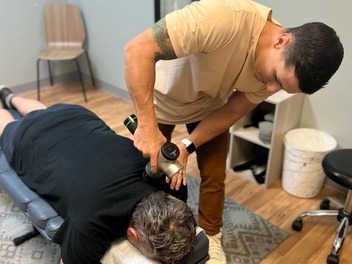
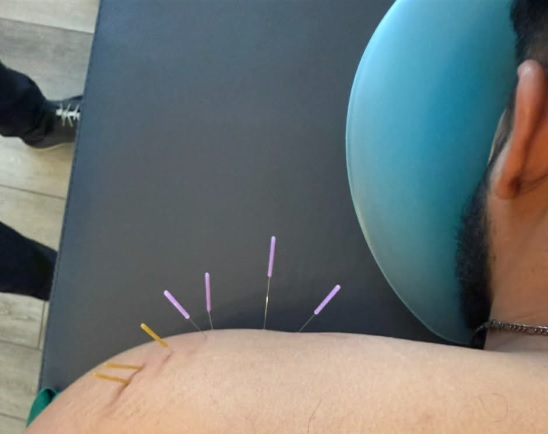
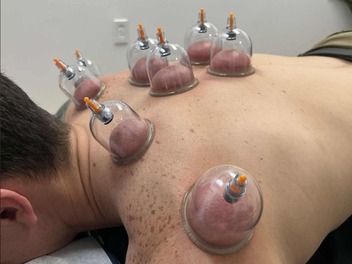
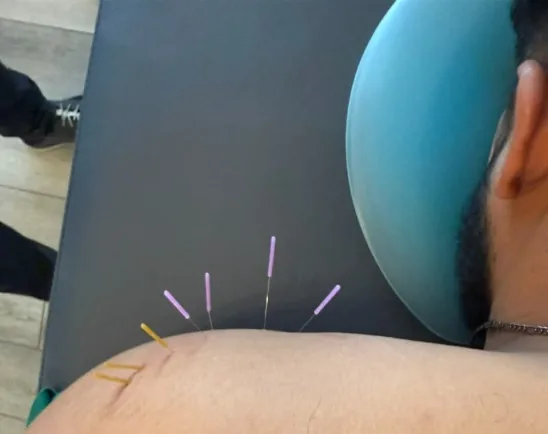
Joints rarely go wrong on their own. The muscle guarding a stiff joint, a tendon that has been overloaded for months and fascia that has tightened around an old injury will all pull the problem back if they are left alone. That is why a plan here often pairs chiropractic care with therapeutic massage, dry needling, cupping or shockwave therapy in the same visit, so the adjustment holds longer and you get back in full swing faster. The full list is on our treatments and services page.
Pair it with

Common questions
Is a chiropractor a real doctor?
Yes. A chiropractor holds a Doctor of Chiropractic degree and has to be licensed by the state to practise. In Florida that license comes from the Florida Board of Chiropractic Medicine, and Dr. Muren’s license number is CH12412.
Is a chiropractic adjustment safe?
Yes. For the vast majority of people, adjustments are safe and gentle. We start every relationship with a full exam precisely so we know your body is a good fit, and if a forceful technique isn’t right for you, we use a low-force or instrument-assisted method instead.
Does getting adjusted hurt?
It shouldn’t. Most people feel a quick release of pressure and a sense of relief, not pain. You might feel a little tender afterward the way you would after a good workout, but that usually fades within a day.
Do chiropractors only treat backs?
No. The spine is a big part of the work, but we also treat necks, headaches that start in the neck, shoulders, hips, knees and feet, because pelvic and extremity joints matter as much as the spine. Plenty of knee and heel problems trace back to how the hip or the ankle is moving.
Can I see a chiropractor after a car accident or a work injury?
Yes. After a crash in Florida you need to be seen within 14 days for your PIP benefits to apply, and we bill PIP directly; the auto accident and PIP care section above covers the steps. Injuries on the job go through workers’ compensation, which we also accept, and the work injury and workers compensation care section explains how that works.
Which chiropractor is best for car accident injuries?
Full Swing Healthcare is built for car accident injuries, clinically and on the paperwork side. Every visit generates detailed clinical records with objective findings, range of motion measurements, orthopedic test results and functional assessments, and that documentation is what supports a PIP claim or, if your damages exceed the PIP limits, a personal injury case. We understand how adjusters and attorneys read those records and build them with that in mind from day one. We coordinate with personal injury attorneys regularly and can refer you to reputable Jacksonville area firms that work on contingency if you do not already have representation. Same-day appointments are often available for accident patients.
Which chiropractor is best for sports injuries?
We treat athletes as mechanical problems with mechanical solutions, which means finding the cause of the injury rather than managing the pain until it fades on its own. We also do not throw every tool at every patient: we assess what is actually driving the injury and choose the approach from that finding. Injury patterns are not random, they follow the demands of the sport, so how a volleyball player loads her shoulder in the serve creates a different and equally predictable set of stresses from how a distance runner absorbs force. We see runners from Riverside and Five Points, cyclists from the Southside trail networks, golfers from the courses around our Beach Blvd location, and competitive youth athletes from Mandarin and Baymeadows.
Does PIP insurance cover chiropractic after a car accident?
Yes, and every registered vehicle in Florida is required to carry at least 10,000 dollars in PIP. The catch is the strict 14 day window: you must be seen by a provider within 14 days of the crash or the benefit is permanently forfeited. The cutoff runs from the date of the collision, not from when your pain shows up, which matters because soft-tissue injuries often do not peak until 48 to 72 hours after impact. If another driver caused your injuries you may also have a bodily injury claim against their liability insurance on top of your PIP benefit, and we document every visit specifically to support that if it becomes necessary. We perform the full exam, classify the injury and begin treatment in a single visit, so you are covered from day one.
Does insurance cover prenatal chiropractic?
Most major plans cover prenatal chiropractic under the same benefits as any other chiropractic visit, with no separate pregnancy exclusion. Pregnancy visits use the same procedure codes as a standard visit; only the diagnostic codes differ, reflecting what is being treated, and the techniques are modified to keep you safe and comfortable. We accept Florida Blue, United Healthcare, Humana, Cigna, Florida Medicaid and VA benefits, and we verify your exact plan before you walk through the door. Plenty of people assume pregnancy is excluded and put off care for weeks over an assumption that turns out to be wrong, so it is worth the one phone call to find out.
How much is chiropractic without insurance?
Self-pay is 115 dollars for a first visit, which includes the full exam, and 50 dollars for follow-up adjustments. No hidden fees and no surprises, just a clear price so you can decide without guessing. We accept HSA and FSA cards, so if you have a health savings or flexible spending account your visits likely qualify. Acupuncture, shockwave therapy and massage are priced separately. We also verify insurance benefits at no charge, and a fair number of people who call assuming they have no chiropractic coverage turn out to have it.
Where can I find a chiropractor for hip pain?
The most consistent finding we see with hip-region pain is a restricted sacroiliac joint. When the SI joint loses normal mobility, the hip flexors, TFL and gluteal muscles tighten to compensate, and over time that tension becomes pain you feel directly in the hip, one level below the actual problem. Every hip assessment here covers the SI joint, the lumbar spine and hip joint mechanics, not just the area that hurts. If you have been diligently stretching your hip flexors for months without improvement, there is almost certainly a mechanical driver that stretching alone cannot touch.