
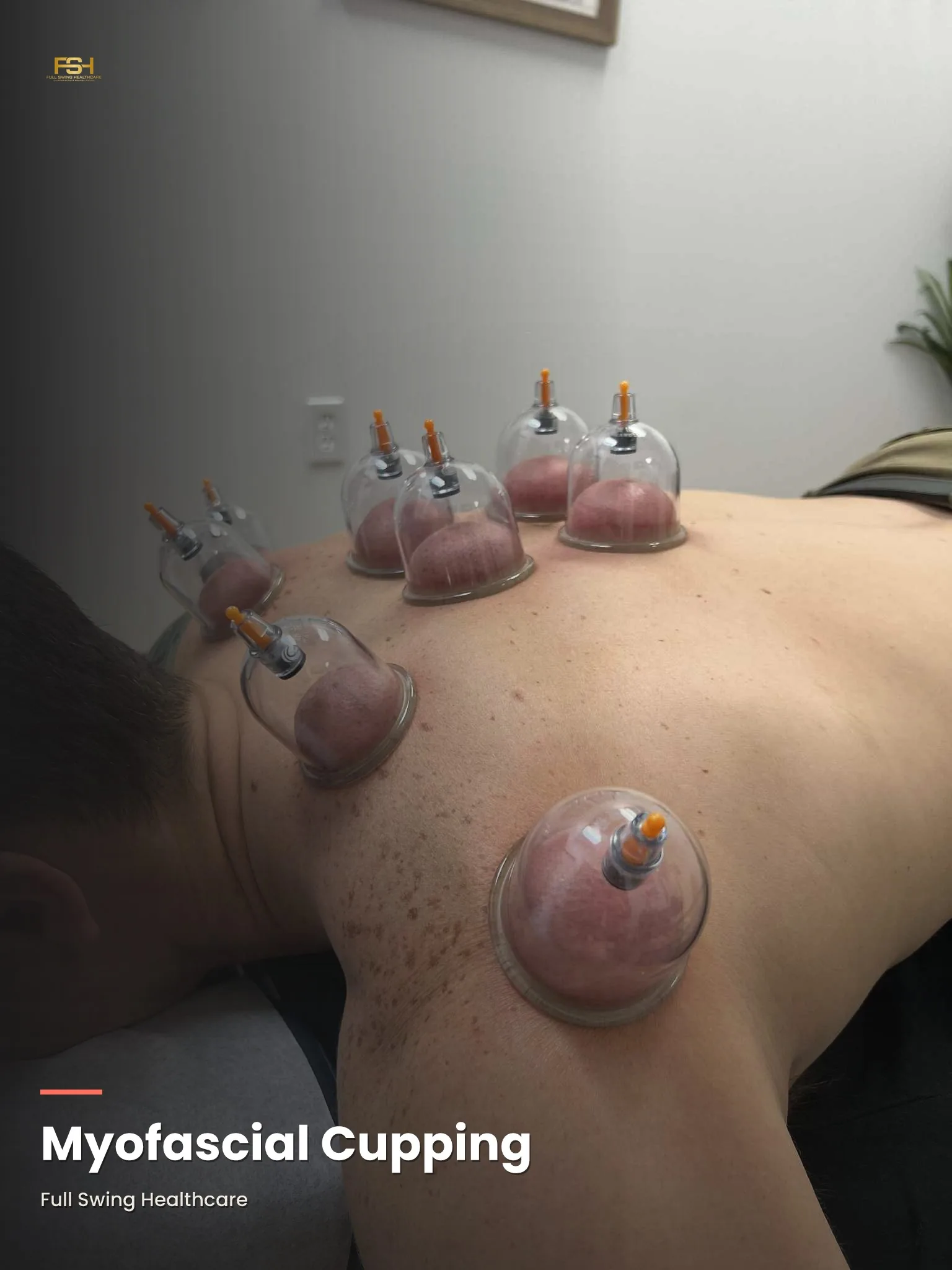
If a muscle feels glued down no matter how much you stretch, cupping therapy in Jacksonville goes after the real culprit: the fascia wrapped around it, not the muscle itself. Myofascial cupping lifts that tissue instead of pressing into it, opening up tight layers and pulling fresh blood into spots that have been starved and stiff. At Full Swing Healthcare, it’s one of the quietest, most satisfying tools we reach for, and we use it as part of a real plan, not a one-off spa trick.
What myofascial cupping actually does
Most hands-on work pushes down: a thumb, an elbow, a knee into a knot. Cupping does the opposite. We place soft silicone or glass cups on the skin and create gentle suction that pulls the tissue up and away from what’s underneath. That lift decompresses the fascia (the connective web that wraps every muscle), separates layers that have stuck together through injury, chronic load, or repetitive motion, and draws oxygen-rich blood into areas that have been congested and tight.
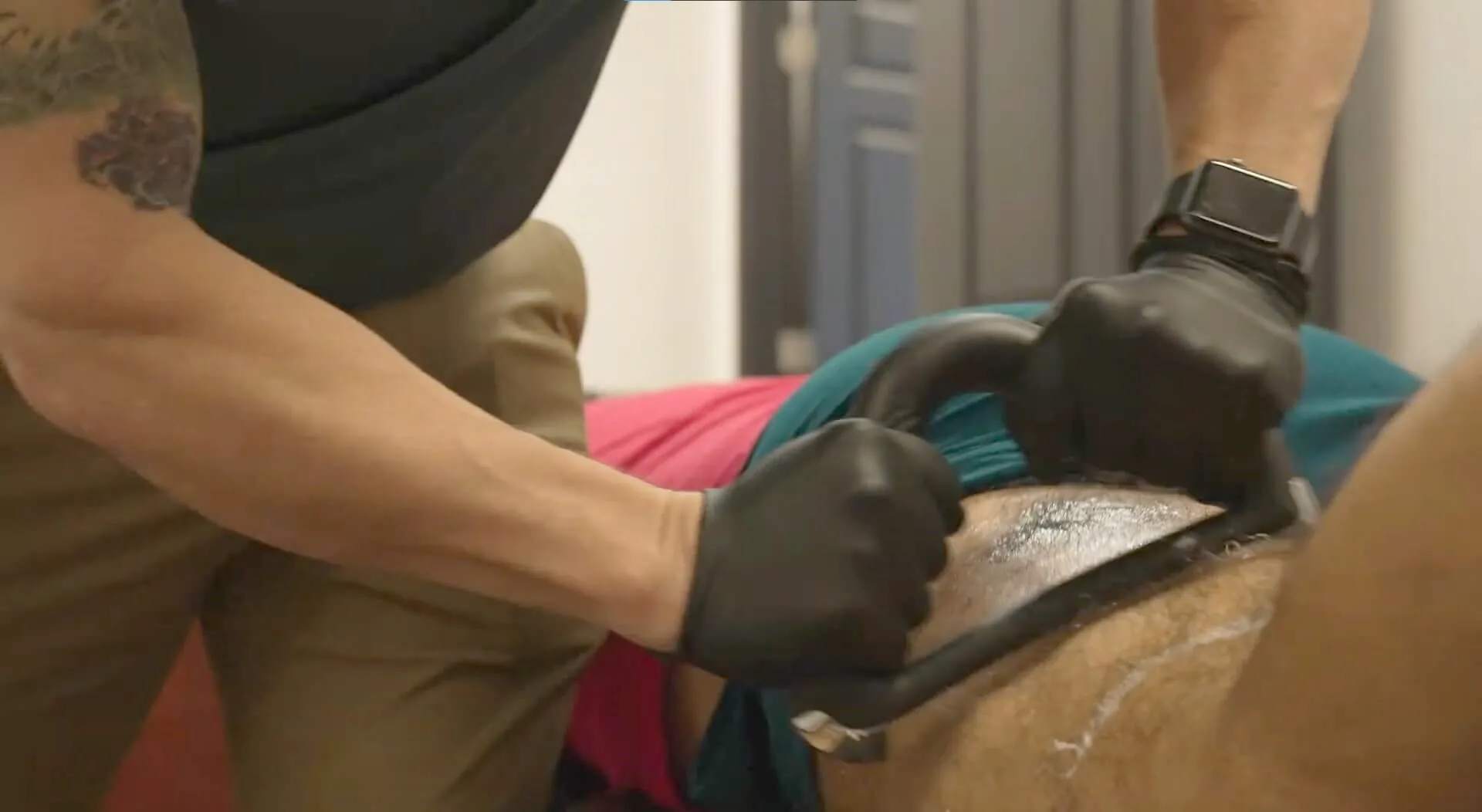
That second part matters more than most people realize. Poor circulation is a big reason fascial restrictions don’t heal on their own. When the suction floods a blood-poor area with fresh flow, the tissue finally gets the oxygen and repair resources it needs. Sometimes the cups stay put over a stubborn spot for a couple of minutes. Other times we glide them along a muscle with a little oil to cover more ground, like ironing out the kinks in a sheet that’s bunched up. Either way the goal is the same: free up the slide and glide between tissues so your body stops bracing and starts moving.
Cupping vs. massage and manual soft-tissue work
Massage, scraping, foam rolling, and deep manual therapy are all useful, and we use them every day. But they share one thing: they work by pressing into the tissue. That compression drives fluid through a muscle, which helps, though it can only do so much, because pressing down closes tissue layers together. It can’t separate them.
This is also why the clinical name for the technique is myofascial decompression. Compression is what every other soft tissue tool does, and decompression is the missing half. If you have seen the phrase on an athlete’s shoulder or hamstring in coverage of the Olympics, that is the same treatment described by what it does to the tissue rather than by the equipment it uses.
The cups themselves come in a few forms and they behave differently. Silicone cups squeeze to create suction and are soft enough to slide along a muscle, which suits gliding work. Rigid plastic cups draw with a hand pump, so the pressure is adjustable and repeatable, and they hold well in one spot. Glass cups are the traditional ones and hold a strong steady pull. Static cupping parks a cup over one stubborn area for a couple of minutes, dynamic or gliding cupping moves it along the muscle with oil, and flash cupping applies and releases quickly and repeatedly for a more stimulating effect. Which one you get is a question of the tissue and the goal, not of preference.
Cupping is the one soft-tissue tool that lifts instead of presses. That vertical pull is what reaches restrictions the pushing techniques never quite touch, especially bound-down layers of fascia that have been stuck together for months. It’s not better than massage or myofascial scraping, it’s the missing direction. That’s why we often combine them in the same visit rather than picking one.
What cupping therapy helps with
Cupping earns its keep across a lot of the problems we see every week at the beaches. A few of the most common:
Back and mid-back tightness
The dense sheet of fascia running along your spine is under near-constant load in anyone who lifts, sits for long hours, or carries a bag on one shoulder, which describes most of Jacksonville’s working population. When that fascia gets restricted, your spine can’t rotate or bend the way it should, and chiropractic adjustments struggle to hold because the tight fascial sleeve keeps compressing the joints right back. Cupping along the spine decompresses that envelope and restores the glide that lets an adjustment actually stick.
Hip, IT band, and outer-knee tightness
The outer line of the leg runs from the lower calf, up through the IT band, over the hip, and into the glutes. Runners, cyclists, and anyone with nagging hip or knee pain usually has a restriction somewhere along it. The IT band itself is dense connective tissue, not a muscle, so it can’t really be stretched, and foam rolling only calms the area around it. Decompressive cupping separates those bound layers and restores the glide that outer-knee and hip pain depends on.
Neck, upper back, and tension headaches
Desk posture, screen time, and stress all load the upper traps and neck the same way: holding a shortened, braced position for hours. Over time the fascia around those muscles gets adherent, and you get that concrete-slab tightness across the shoulders that can climb into a tension headache. Cupping through the neck and upper back decompresses those layers, brings in circulation, and quiets the muscle down. Patients already getting adjustments for neck pain who aren’t holding as long as they’d like often turn a corner once the fascia is addressed.
Plantar fasciitis and tight calves
Chronic plantar fasciitis almost always involves tightness above the foot too, in the calf and Achilles, not just the arch itself. Cupping along the calf and Achilles decompresses that back-of-the-leg chain, improves circulation, and eases the constant tension a tight calf transmits into the arch with every step. For Florida feet walking on tile and concrete year-round, that back-of-the-leg load never really gets a seasonal break, so keeping it loose matters.
Post-surgical and old scar tissue
Scar tissue heals in cross-linked patterns that bind to nearby tissue and can restrict movement for years after the original injury is done healing. Once a surgical site is fully closed and your surgeon has cleared hands-on work, cupping applied along the scar uses that decompressive pull to loosen the cross-linked collagen from the layers around it and restore the sliding motion the scar has been blocking.
About those circular marks
Yes, cupping can leave round, bruise-like marks for a few days. Here’s the honest truth: they aren’t bruises and they don’t hurt. A bruise comes from blunt trauma breaking capillaries. Cupping marks are the opposite story, they’re old, stagnant blood and fluid drawn up to the surface from tissue that was blood-poor, so your circulation can flush it out and replace it with fresh flow. Darker marks show up where the tissue was the most congested. They fade on their own, usually within three to seven days, and they’re a sign the work landed where it needed to.
Your Jacksonville cupping clinic
Full Swing Healthcare sits at 13770 Beach Blvd #4, minutes from Jacksonville Beach, Neptune Beach, Atlantic Beach, and Ponte Vedra Beach, so quality cupping therapy stays close to home for the whole east side. Same-day appointments are often available, and because we keep cupping, chiropractic, and rehab under one roof, you can handle a combined visit in a single trip instead of driving all over town. Call (904) 539-3352 or book online, and we’ll pick the right mix at your visit.

Who performs your cupping
Your cupping is done by Dr. Cody Muren, DC, a Palmer College graduate (Florida license CH12412), or Dr. Eric Hall, DC. Both assess before they treat, so the cups go where they’ll actually do the most good, and both are set up to combine cupping with chiropractic, scraping, and shockwave on a single plan instead of sending you to three places that never talk to each other. Whether the cups stay stationary over a focal spot or glide along a tight chain is a call they make based on your condition and where you are in healing.
“My sister referred me to Full Swing because they’re the best in Jacksonville. I think they’re the best in Florida. Services include acupuncture, chiropractic, cupping, massage and stem wave.”
KF Karyn Finley-Thompson
Jacksonville
Is it safe? For most people, yes, and side effects are usually limited to the temporary marks and a little tenderness. A few situations call for extra care or mean we skip a spot: active skin conditions like eczema or psoriasis over the area, open wounds, varicose veins right under a cup, blood-clotting disorders, or blood thinners. Tell us up front, and your doctor reviews the treatment area and your history before any cups go on.
What to expect in a session
We find the real source
True to how we do everything at Full Swing Healthcare, we assess before we treat. We figure out which tissues are actually restricted, not just where it hurts, so the cups go where they’ll do the most good.
Cups go on
You’ll feel a firm tug and warmth as the suction draws the tissue up. Most people describe it as a deep, oddly relieving stretch from the inside. No needles, no forceful pressure.
Release and reset
We hold the cups over a stubborn spot for a couple of minutes, or glide them along a tight chain. As the fascia lets go, the surrounding muscles often calm down on their own.
You move better, right away
Many people notice looser, easier motion the moment they sit up. We’ll show you a stretch or two to hold onto the gains between visits.
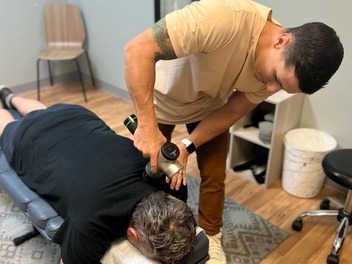
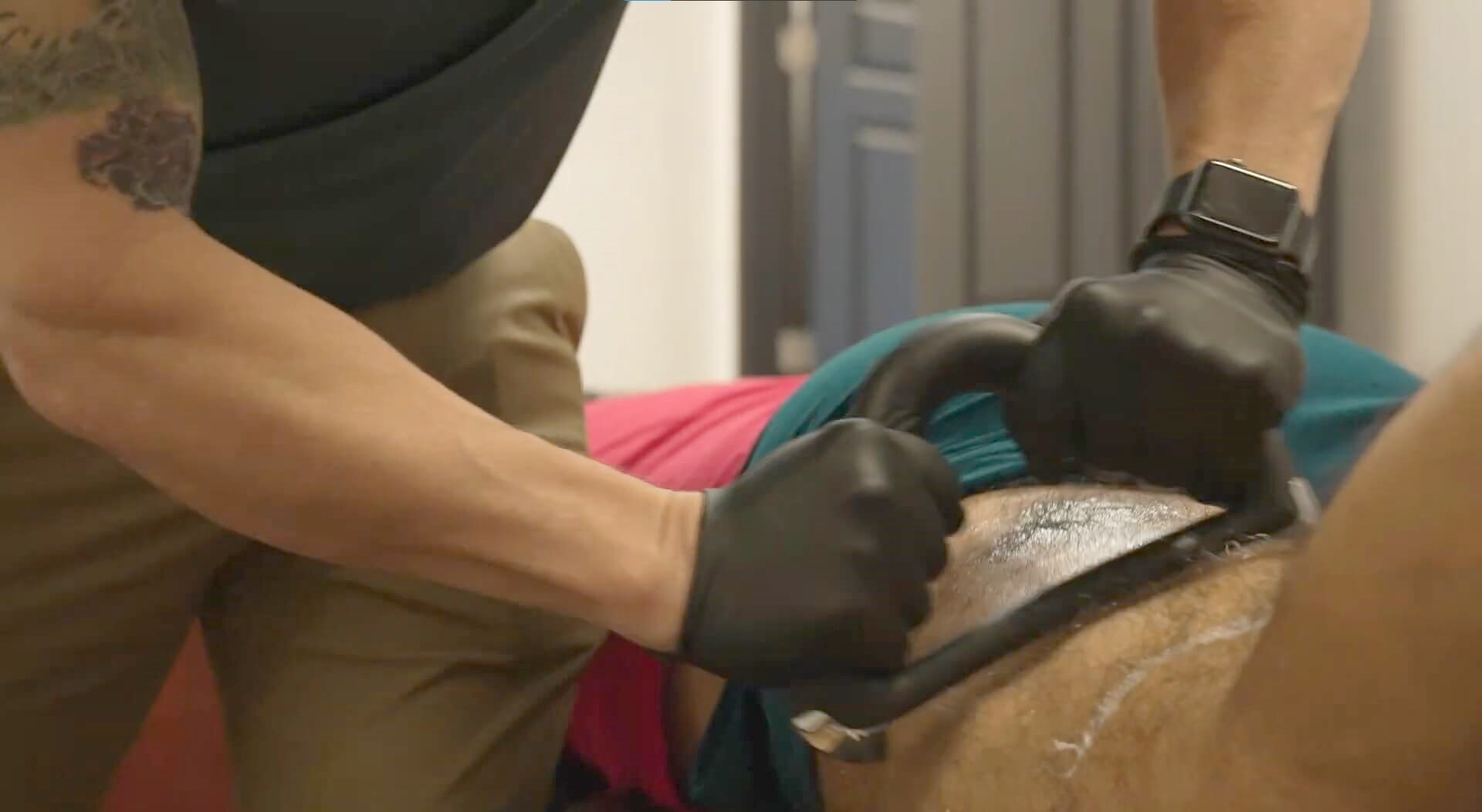
Cupping shines as part of a plan, not a one-off. We often pair it with a therapeutic massage session or a chiropractic adjustment: soften and free the soft tissue first, then the joint moves the way it’s supposed to and the relief sticks. That whole-toolbox approach is how we get the beaches back in full swing.
$115 first visit, exam included
$55 per cupping session
+$30 add an adjustment to any treatment
Pair it with
Cupping Therapy FAQs
Does cupping hurt?
The suction ranges from a mild pull to a firm, intense tug depending on how restricted the tissue is. Most people describe it as uncomfortable but never sharp, more of a deep stretch than a pinch. The area can feel a little tender for 24 to 48 hours after, similar to the soreness following a deep-tissue massage.
I have an event in a few days. Will the marks show?
They can. Marks typically fade within three to seven days, and the more restricted the tissue, the darker they start. If you have something coming up where visible marks would be a problem, just tell us, and we can time the session or choose areas that stay covered.
How many sessions before I notice a difference?
Most people feel a real change in range of motion and tightness within the first two to three sessions. Restrictions that have been building for months take longer to fully resolve than recent ones. Because cupping is part of a broader plan, the relief you feel is usually the combined result of the cupping, the chiropractic work, and any other soft-tissue treatment in the same visit.
Can cupping help after surgery once I’ve healed?
Often, yes. Post-surgical scar tissue forms in cross-linked patterns that bind to nearby tissue and can restrict movement for years. Once the incision is fully closed and your surgeon has cleared hands-on work, cupping along the scar uses gentle decompressive pull to loosen that scar from the surrounding layers and restore the sliding motion it’s been blocking.
How is this different from traditional cupping?
Traditional cupping places cups along set energy lines for a whole-body effect. Our cupping is aimed at the exact fascial restriction we find during your assessment, either held over a focal spot or glided along a tight chain. The target is the specific tissue causing your problem, so the approach and the goal are different.