
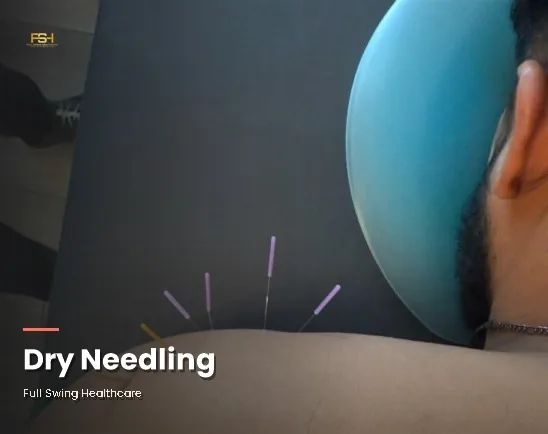
That knot between your shoulder blades that never quite lets go is exactly what dry needling in Jacksonville is built to release. A thin, sterile needle goes straight into the trigger point that is keeping the muscle locked, the muscle twitches, and the tight band that massage only loosens for a day finally lets go for good. At Full Swing Healthcare, Dr. Cody Muren and Dr. Eric Hall use it as a clinical tool inside a real plan, not a standalone gimmick.
What dry needling actually is
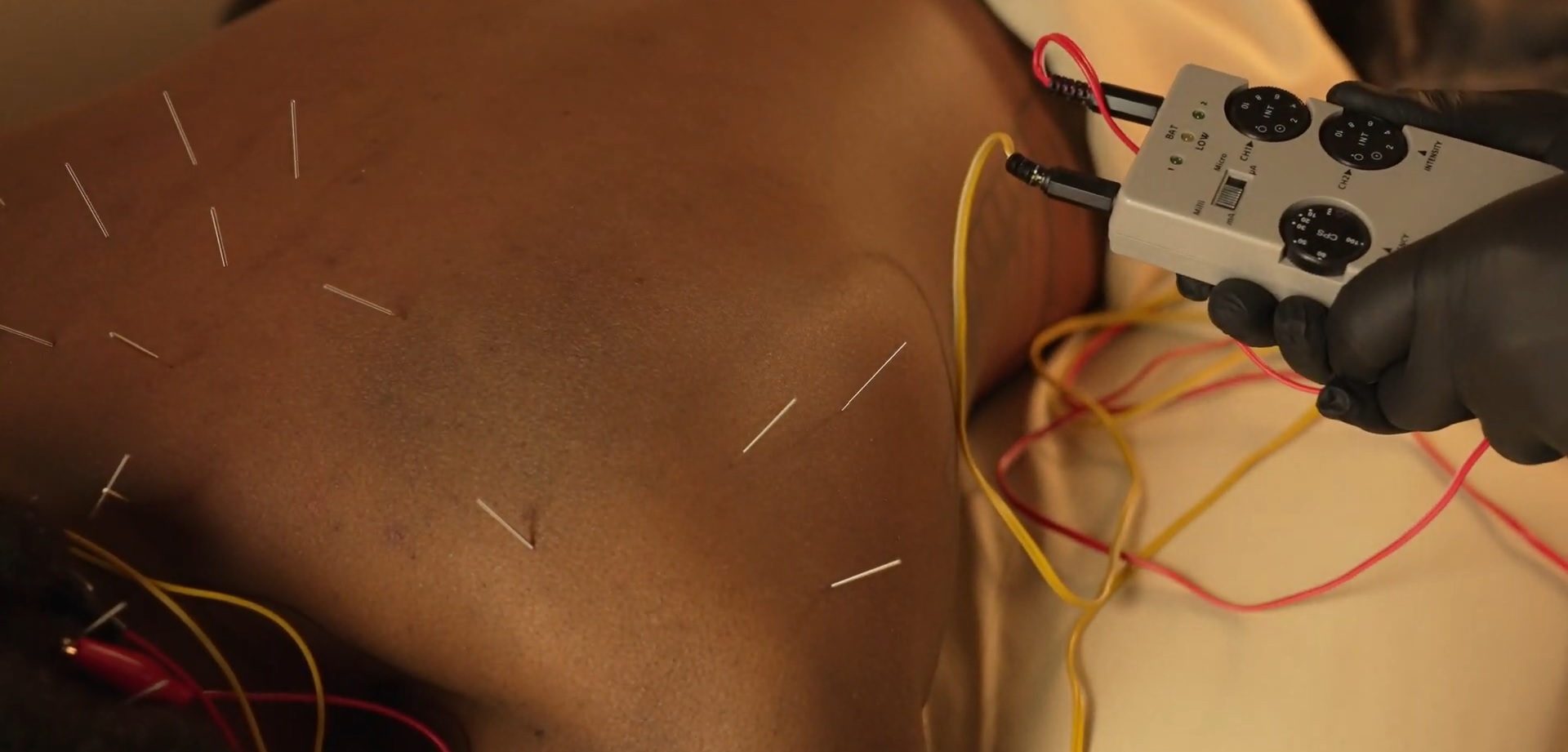
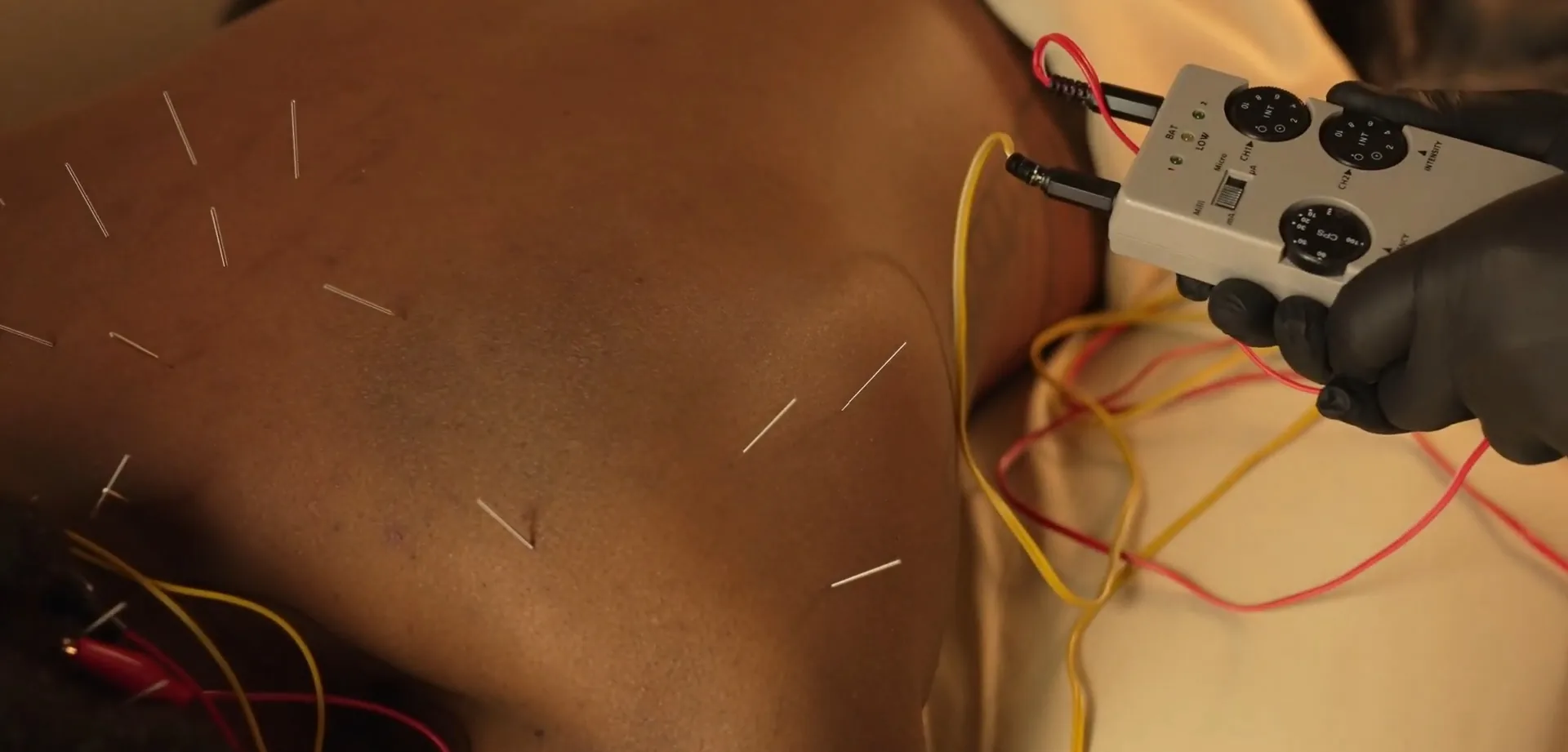
Dry needling places a thin, sterile filament needle directly into a myofascial trigger point: the tight, irritable knot inside a muscle that refers pain elsewhere. That knot is a small patch of muscle stuck in a contraction it cannot release on its own, which is why pressing on it from the outside (massage, foam rolling, stretching) loosens it for a day and then it comes right back. When the needle reaches the spot, the muscle gives a quick, involuntary twitch and then lets go. That twitch is the whole point: it resets the overworked fibers, calms the pain signaling, and brings blood flow back to tissue that has been starved and cramped.
“Visited Dr. Muren with some serious upper back pain. After the first visit I felt instant relief. Easy in and out. I definitely recommend Full Swing.”
CS Cameron Smith
Jacksonville
Dry needling vs acupuncture: same tool, different intent
People ask how dry needling is different from acupuncture, and it is a fair question, because both use a similar hair-thin needle. The difference is intent. Acupuncture chooses points to influence the whole system, easing inflammation, pain signaling, and stress across the body. Dry needling is a Western, anatomy-based technique aimed at one thing: switching off the specific muscle trigger point your exam shows is driving the pain. One is broad, one is highly local, and they are complementary rather than competing. We offer both acupuncture and dry needling at Full Swing, and we match the technique to what we actually find.
You will also see dry needling written up as intramuscular manual therapy, or trigger point dry needling. Those are the same treatment under a more literal name, and the name is a useful one: the needle is a manual therapy tool that happens to work inside the muscle rather than on top of it, and nothing is injected, which is where the word dry comes from in the first place.
What dry needling treats at Full Swing
Trigger points refer pain in predictable patterns, and knowing those patterns is what separates targeted dry needling from poking around. These are the problems we treat with it most often at the beaches:
Tension and cervicogenic headaches
A tight band across the top of the shoulders and the base of the skull refers pain up into the temple and behind the eye, which is why so many tension headaches are really a muscle problem, not a head problem. Needling those points releases the guarding that sends pain upward. For patients already getting adjustments for headaches and responding, but not holding as long as they would like, adding dry needling on the same visit usually stretches out the gap between flare-ups.
Neck and shoulder stiffness
The stiff neck from a day at the desk and the post-surf ache in the shoulder often live in the same muscles. When chronic neck tightness does not fully resolve with adjustments alone, there is almost always a muscular trigger point holding it in place: the joint gets freed, then the muscle quietly pulls it back. Dry needling handles the muscular side of the equation so the correction has a chance to hold.
Low back tightness and the muscular side of sciatica
Some of the deepest low back muscles sit too deep for hands to reach well, and when they knot up they produce a dull, aching low back pain that stretching barely touches and that gets blamed on discs. A needle reaches them directly. The same is true when a tight deep hip muscle (the piriformis) is squeezing the sciatic nerve and driving pain down the leg: needling it directly often works faster than anything else we try.
Sports and overuse injuries
Dry needling speeds recovery from muscle guarding, strain patterns, and the protective spasm that clamps down around an injury. Calves, hamstrings, hips, and the rotator cuff all respond. Paired with our athletic recovery program, it shortens return-to-sport timelines for Jacksonville athletes who train year round in real heat and humidity and cannot afford to wait out the usual arc.
Shoulder pain and the rotator cuff
The rotator cuff and the muscles around the shoulder blade develop trigger points that can mimic impingement and keep the joint from moving cleanly. Needling them draws blood flow into tissue that needs to heal and frees up range of motion we can then build on with the rest of your plan.
Dry needling also earns its keep on a handful of smaller, stubborn patterns:
- Plantar fasciitis driven by a tight calf and the small muscles of the foot
- Stubborn muscle knots that massage alone will not budge
- The lingering muscle patterns that set in after a car accident or whiplash
- Limited range of motion from chronically guarded muscles
Your Jacksonville dry needling clinic
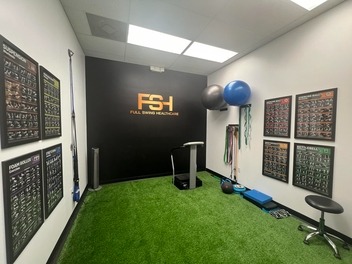
Full Swing Healthcare sits at 13770 Beach Blvd, minutes from Jacksonville Beach, Neptune Beach, Atlantic Beach, and Ponte Vedra Beach, so trigger point dry needling stays close to home for the whole east side. Same-day appointments are often available, and because we keep dry needling, chiropractic, and rehab under one roof, most people handle a combined visit in a single trip instead of driving all over town. We have treated Jacksonville and the Beaches since 2017.

Who performs your dry needling
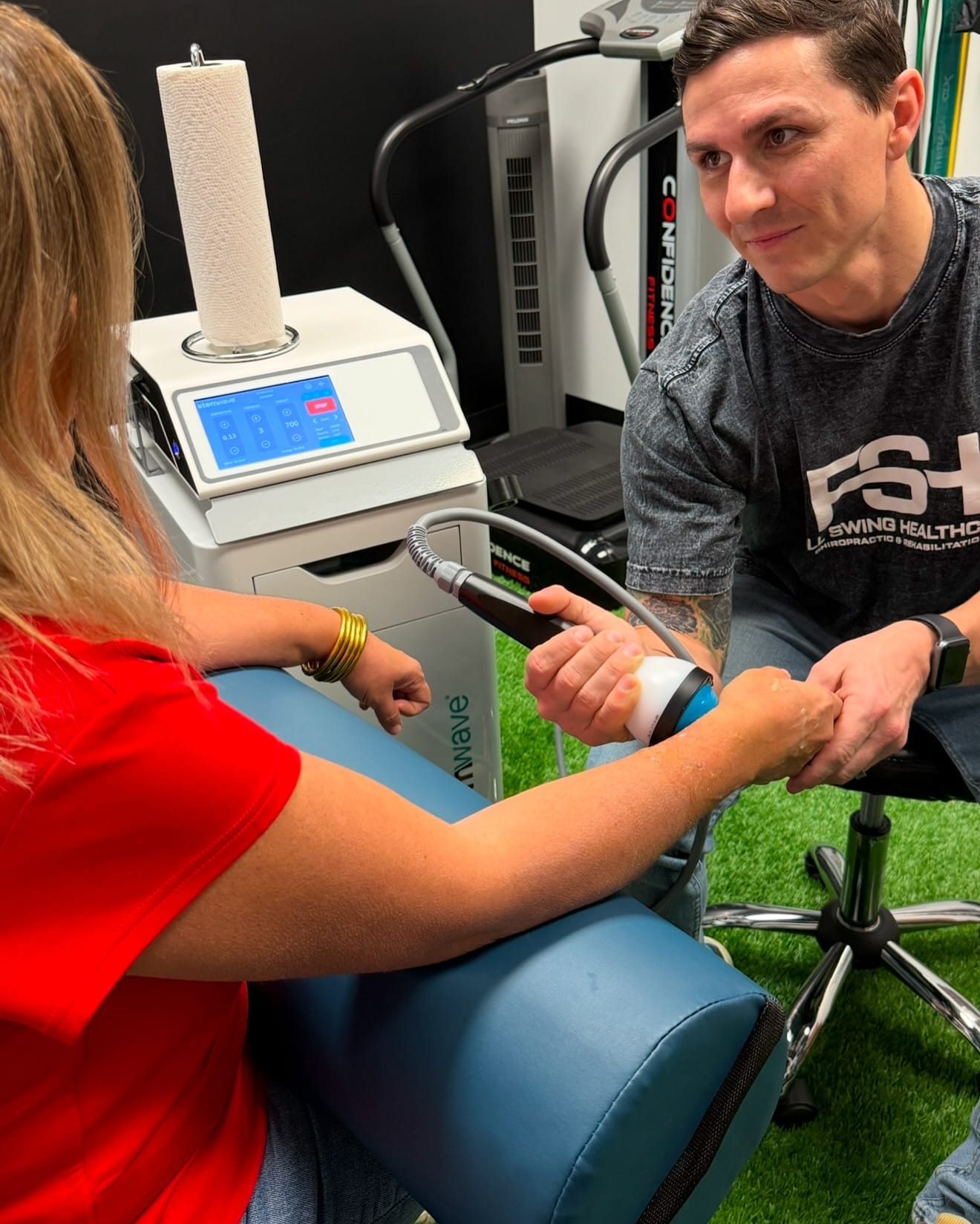
Your dry needling is done by Dr. Cody Muren, DC, a Palmer College graduate (Florida Board of Chiropractic Medicine, license CH12412), or by Dr. Eric Hall, DC. Both hold current Florida chiropractic licenses and perform dry needling under them, both are trained in the technique, and both use it as one piece of a plan built to fix the problem, not manage it forever. Dr. Muren folds needling in with chiropractic and shockwave therapy; Dr. Hall brings a strong sports and soft-tissue background to athletes and overuse cases. Dry needling is never sold as a standalone product here: it rides along with the rest of your care.
What to expect at your visit
We assess first
Before a single needle, we examine you, find the trigger points by feel, and confirm they are actually what is driving your pain. That is the Full Swing way: we figure out what is going on before we treat it.
The needle goes in
Most people feel a small pinch, then a deep, cramp-like twitch when the needle reaches the trigger point. It lasts a second or two. Each needle stays in only seconds to a few minutes, and a session usually treats three to eight points depending on the area and how long the problem has been there.
The muscle lets go
You will often feel the band soften right on the table. We may treat several points in one session, and on most visits we needle first, then adjust the joint while the muscle is relaxed.
You move better, soon
It is normal to feel workout-style soreness for 12 to 48 hours, the intended part of the healing response. Most people notice looser, freer movement within a day or two.
“I do a lot of kickboxing and my back and neck get so tight. One treatment with Dr. Cody Muren and I feel so much better.”
TM Tyler Mathog
Jacksonville
It works even better paired up. Dry needling calms the muscle; a chiropractic adjustment frees the joint it has been pulling on. On most visits we needle first to quiet the protective guarding, then adjust while the muscle is relaxed, so the correction holds longer. Combine it with adjustments, scraping, or cupping and you break the cycle that keeps the knot coming back instead of just chasing the symptom.
Is dry needling safe?
Yes. Every needle is sterile, single-use, and disposed of after each point. The most common after-effect is brief, workout-style soreness or a small bruise. A few situations call for a closer look first: if you are on blood thinners, are pregnant, have a bleeding disorder, have an active skin infection at the site, or have a real fear of needles, tell us up front. Dr. Muren reviews your full health history before the first needle and adjusts the plan accordingly. If you are nervous about needles, say so; we start small, go slow, and talk you through every step.
Assessment always comes first
Same day appointments often available
Since 2017 serving Jacksonville
Pair it with
Dry needling questions
Does dry needling hurt?
You will feel a small pinch when the needle goes in, then a brief, deep twitch or cramp sensation when it reaches the trigger point. It is quick, and most people describe it as oddly satisfying once the muscle releases. Expect workout-style soreness afterward for 12 to 48 hours, usually gone within a day of that clearing.
Is dry needling legal in Florida?
Yes. Florida chiropractors are authorized to perform dry needling within their scope of practice, and Dr. Muren is licensed by the Florida Board of Chiropractic Medicine (license CH12412). You do not need a physician referral to be seen.
How is dry needling different from acupuncture?
Both use thin needles, but the intent differs. Acupuncture selects points to influence the whole system. Dry needling is anatomy-based and targets a specific myofascial trigger point, the exact muscle knot driving your pain.
How many sessions will I need?
It depends on how long the issue has been there and what is causing it. Recent, acute problems often respond in two to four sessions; long-standing, chronic patterns may take a short series. We lay out a realistic plan after your assessment and re-check as we go.
Does insurance cover dry needling in Florida?
Coverage varies by plan. Some Florida Blue and United Healthcare plans cover dry needling when it is billed appropriately; others exclude it. We verify your benefits before your first visit so there are no surprises.
Can dry needling be combined with a chiropractic adjustment?
Yes, and it is the standard approach here for most muscle and joint problems. We needle first to release the muscular holding pattern, then adjust the joint while the surrounding tissue is relaxed. The correction tends to hold longer when the muscle tone maintaining the problem has already been settled.
What should I do after a session?
Drink water, move normally, and skip an intense workout for the rest of the day. Light activity and gentle stretching help. A little soreness is normal, and a heating pad usually settles it.
Dry needling vs. massage therapy for muscle pain in Jacksonville
Both dry needling and massage therapy work for muscle pain, but they work differently. Massage releases broad tissue tension from the outside in; dry needling reaches specific trigger points that external pressure simply cannot reset. For most patients dealing with persistent muscle pain in Jacksonville, both have a place in a complete care plan.
Does dry needling in Jacksonville help with sciatica?
Yes, dry needling can be a powerful tool for sciatica, but the answer depends on what’s actually driving your pain. If piriformis muscle spasm is compressing the sciatic nerve, dry needling is extremely effective. If a disc bulge at L4-L5 or L5-S1 is the culprit, needling still addresses the muscular component while chiropractic care addresses the disc.
How long does a dry needling appointment take in Jacksonville?
A dry needling session at Full Swing Healthcare runs 20 to 35 minutes. Your first visit will take 45 to 60 minutes total because Dr. Muren completes a thorough assessment before any needles go in. Return visits are more focused and generally land on the shorter end of that range.
Which clinic in Jacksonville offers dry needling for sports injuries?
We use dry needling as a frontline tool for sports injuries. Sports-related trigger points, the tight, irritable knots that form around overloaded or injured tissue, don’t resolve on their own, even after the structural injury heals. That’s often the real reason athletes feel like they never fully get back to where they were.
Do I need a referral for dry needling in Jacksonville?
No referral needed. Florida law gives you direct access to chiropractic care, including dry needling performed by a licensed chiropractor, so you can call Full Swing Healthcare and book an appointment today. Most of our patients in Jacksonville, the Beaches, and Ponte Vedra come in without ever talking to a primary care doctor first.
Where can I get dry needling for shoulder pain in Jacksonville?
Our shoulder work targets the rotator cuff trigger points and the cervical contributors that most people with shoulder trouble have never had properly evaluated. If cortisone shots and generic PT haven’t given you lasting relief, this is likely why. Most shoulder pain patients we see have already done the rounds, physical therapy, cortisone, rest, all directed at the front of the shoulder.
Where can I get dry needling for knee pain in Jacksonville?
For knee pain we don’t just treat the knee, we assess the whole kinetic chain, because the hip and foot mechanics loading the knee are usually part of the story.
Muscle trigger points are a surprisingly common driver of knee pain, especially for runners, cyclists, and anyone doing lateral-movement sports, and the quadriceps, calf and hip muscles loading the joint are usually where we find them.
Dry needling vs. acupuncture in Jacksonville: what is the difference?
Both use the same thin monofilament needle, but that’s where the similarity ends. Dry needling targets trigger points through a Western anatomical lens, while acupuncture works from a traditional Chinese or orthopedic framework to address broader patterns of pain and imbalance. At Full Swing Healthcare, Dr. Cody Muren is trained and certified in both, so the right tool gets chosen based on what your body actually needs.
Where can I get dry needling for hip pain in Jacksonville?
We are Jacksonville’s go-to spot for dry needling hip pain treatment. We work directly with the deep muscles that drive most hip pain, piriformis, iliopsoas, TFL, and gluteals, muscles that external hands simply cannot reach with the same precision a needle can. The hip region contains some of the deepest muscles in the body.
Is there a dry needling clinic in Jacksonville for headaches and migraines?
Yes, Full Swing Healthcare in Jacksonville regularly treats headaches and migraines with dry needling, targeting the specific muscles at the base of your skull and neck that cause most tension and cervicogenic headaches. Dr. Cody Muren, DC and certified acupuncturist, assesses your pattern at the first visit and chooses the right approach for you. Most people reach for Advil without ever asking what tissue is generating the pain.
Where can I get dry needling for back pain in Jacksonville?
Back pain is where dry needling is most consistently effective for us. A thin filament needle reaches the deep lumbar trigger points that stretching, massage, and surface-level manual therapy simply can’t access on their own. Most patients who walk in with chronic low back pain have already tried everything.
Which clinic offers dry needling for neck pain in Jacksonville?
Neck pain brings people in multiple times a week. Dr. Cody Muren targets the upper trapezius, levator scapulae, and suboccipital muscles that drive most neck pain, and those muscles respond to dry needling in a way that massage and stretching alone often cannot match. The muscles at the root of most neck pain, the upper trapezius and levator scapulae, never really clock out.