
If that first step out of bed sends a spike through your heel, plantar fasciitis treatment Jacksonville patients trust starts here at Full Swing Healthcare. That morning stab is the calling card of plantar fasciitis, the single most common cause of heel pain we see. The reassuring part: it is a mechanical problem with a mechanical fix, and it almost always settles with the right non-surgical care. Our job is to find out exactly why your plantar fascia is inflamed, calm it down, and rebuild the tissue so the pain does not keep coming back.
What plantar fasciitis actually is
The plantar fascia is a thick, fibrous band of connective tissue that runs along the sole of your foot, anchoring at the heel bone and fanning out toward the toes. It works like a bowstring, supporting your arch and absorbing shock every time your foot hits the ground. When the load on that band outpaces its ability to recover, tiny tears build up faster than they heal. The result is inflammation, thickening, and that unmistakable heel pain. Because the fascia tightens up while you rest, the tissue gets pulled taut the moment you stand, which is why those first steps in the morning or after sitting are the worst part of the day.
Most people feel it right where the fascia meets the heel, but it can also show up as a deep ache spread across the arch. Left alone, a cranky fascia rarely fixes itself, because you cannot stop walking on it. Every step keeps re-loading the injured tissue, so the problem tends to drag on for months when it is ignored.
The bowstring has a mechanical name: the windlass mechanism. As your toes bend upward in the last part of a step, the fascia winds around the joint at the base of the big toe, shortens, and lifts the arch into a rigid lever to push off from. The exam test is the windlass test, where the big toe is pulled upward while you stand. Reproducing the heel pain that way points squarely at the fascia rather than at a nerve or the heel pad, which matters because those three problems feel similar and are treated differently.
Heel spurs are not the cause
Plenty of people arrive holding an X ray report that mentions a heel spur and assume the spur is the villain. It usually is not. Spurs form along the line of pull where the tissue attaches to the heel bone, so the spur is a consequence of years of tension rather than the thing generating your pain. Large numbers of people have one and no symptoms at all, and plenty of painful heels have no spur. Treating the loading problem is what changes the pain, which is also why removing a spur is rarely the answer.
Signs and symptoms
Heel and arch pain has a pattern, and you may recognize several of these at once:
- Sharp, stabbing heel pain with your first steps in the morning
- Pain that eases as you warm up, then returns after long standing or a long drive
- A deep ache along the arch after a run on the sand or a full day on your feet
- Tenderness when you press the inside of your heel
- Tightness or a pulling sensation that worsens walking barefoot on hard floors
- Flare-ups after upping your mileage, starting a new workout, or wearing unsupportive shoes
Common causes
Plantar fasciitis rarely appears from nowhere. It builds from load your fascia cannot keep up with, and pinpointing the real driver is the whole point of the exam:
- Repetitive impact from running, walking the beach, or long shifts on hard surfaces
- Tight calves and Achilles tendons that pull constantly on the heel
- High arches or flat feet that overload the fascia
- A sudden jump in activity or training volume with too little recovery
- Worn-out or unsupportive footwear, and Jacksonville is a barefoot, flip-flop town
- Extra body weight, or hip and gait mechanics that shift stress down to the foot
Why shockwave works on stubborn fascia
Here is the frustrating truth about long-standing heel pain: once the fascia has been irritated for months, it can stall in a state of failed healing. The tissue is degraded, blood flow has dropped off, and the body has stopped treating it as an active injury worth repairing. Rest and stretching alone often cannot restart that process, which is why chronic cases feel stuck no matter what you try.
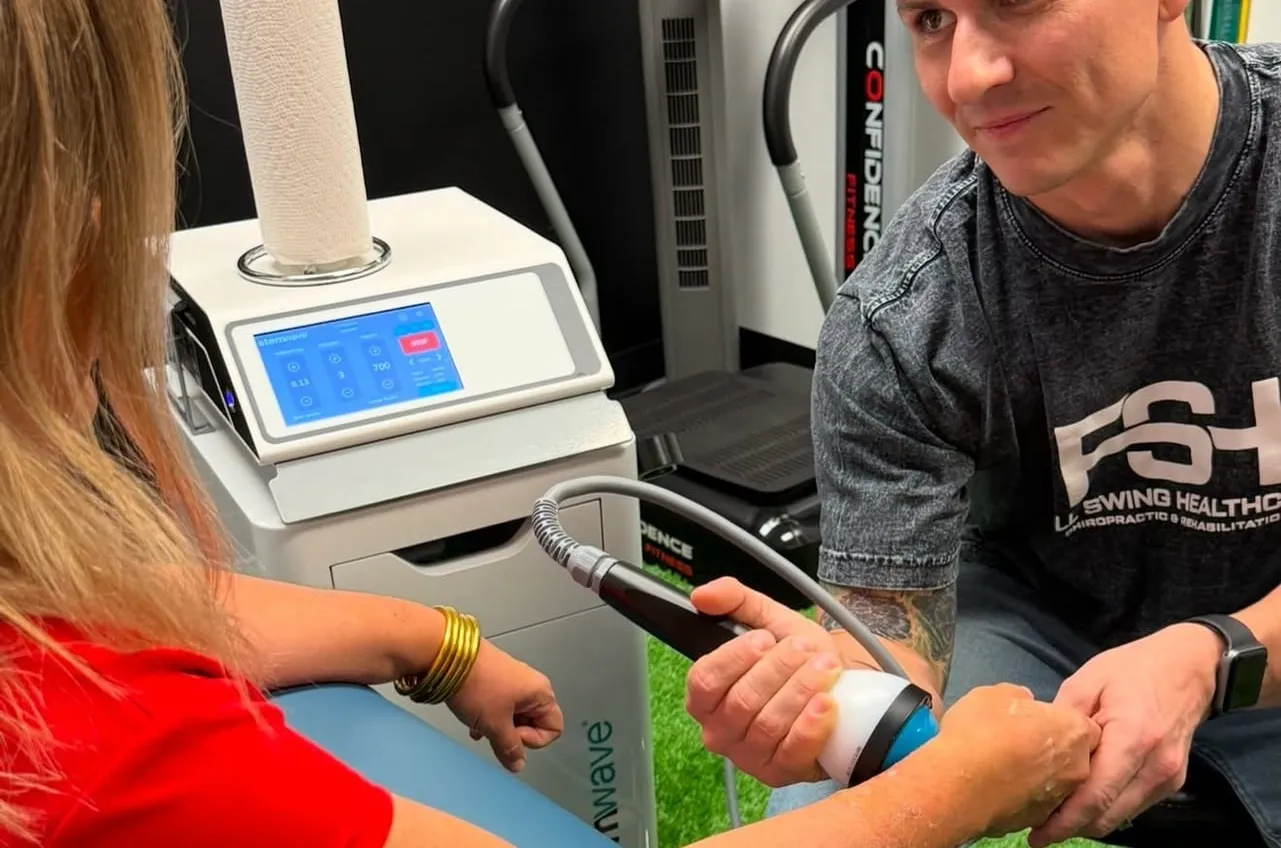
That is exactly where shockwave therapy earns its reputation. Our StemWave system delivers focused acoustic pressure waves into the fascia, deliberately provoking a fresh, controlled healing response in tissue that had given up on repairing itself. It pulls new blood flow into the area, wakes up the cells that lay down healthy collagen, and helps break down the thickened, scarred fascia. It is one of the best-studied options for chronic plantar fasciitis, and it works without injections, medication, or downtime. Most people need a short series of sessions rather than a single visit, and it tends to be the difference-maker for the stubborn heels that have already failed everything else.
How we treat it
We assess before we treat. First we examine your foot, calf, ankle, and gait to confirm it is truly plantar fasciitis and to find what is feeding it. Then we build a plan from the tools that actually move the needle on heel pain:
Shockwave therapy
Our lead treatment for stubborn plantar fasciitis, restarting healing in fascia that has stopped repairing itself. See shockwave therapy.
Myofascial scraping
Instrument-assisted myofascial scraping breaks up adhesions in the fascia and the tight calf that pulls on it, restoring glide and easing the constant tug on your heel. This soft-tissue work is a big reason relief holds.
Dry needling
Dry needling releases trigger points in the calf and foot muscles that refer pain into the heel and keep the fascia loaded.
Load management and home plan
Targeted calf and fascia stretching, footwear guidance, and a smart plan for managing your training volume so the relief sticks once you walk out the door.
One home tool worth understanding, because people buy it without knowing what it is for: the night splint. Your fascia and calf shorten while you sleep, which is exactly why the first steps in the morning are the worst ones of the day. A night splint holds the ankle at a neutral angle overnight so the tissue is not spending eight hours in a shortened position, and the morning pain arrives at a lower level. It is not a cure and it treats nothing on its own, it simply stops each night from undoing the day. Many people find the rigid boot style hard to sleep in and do better with a soft sock style version. If mornings are the worst part of your day, it is worth asking about at your visit.
Care built for runners and beach-active feet at the Beaches
Plenty of our heel-pain patients live an active life out east, and the sand cuts both ways. Running or walking barefoot on soft, uneven beach means your fascia works overtime to stabilize every stride, and that constant demand is a classic trigger for a flare. We see it in runners logging miles along the shore in Neptune Beach, in folks who spend their weekends walking the sand at Jacksonville Beach and Atlantic Beach, and in anyone who trades supportive shoes for flip-flops the second the weather turns warm. Because our clinic sits just minutes from all three beach towns, we can get you assessed quickly and coach your load management around the surfaces you actually train on, so you stay active without keeping the fascia inflamed.
Brooke came to us with a different foot condition, not plantar fasciitis, but her story is the reason we push conservative care first. Dr. Hall used myofascial scraping and a set of at-home exercises to get her out of pain and off the surgery track entirely. That non-surgical, tissue-first mindset is exactly how we approach a stubborn heel too.
$115 first visit, exam included
$50 follow-up visits
Same day appointments often available
“For years I suffered with pain, swelling and stiffness in my feet. I was told surgery was the only option. I’m so thankful I didn’t get surgery and found relief here instead.”
BT Brooke T.
Google review
Don’t walk it off for months. The longer plantar fasciitis lingers, the more your gait changes to dodge the pain, and that is how knee, hip, and back trouble get started. Early care is faster care. Call (904) 539-3352 and let’s get a real look at your foot. Your first visit is $115 and includes the full exam.
Common questions
How long does it take to recover from plantar fasciitis?
Most people feel meaningful relief within a few weeks of consistent care, though stubborn cases that have lingered for months take longer. Shockwave therapy in particular works as a short series of sessions rather than a single fix. After your exam we give you an honest timeline based on how long you have had it and what is driving it.
Can I keep running while I treat it?
Often yes, but usually with adjustments to your mileage, your surfaces, and your shoes while the fascia calms down. Pounding through sharp heel pain only slows healing. We help you stay active in a way that does not keep re-injuring it, so you are not benched any longer than necessary.
Do I need surgery for heel pain?
Almost never. The vast majority of plantar fasciitis resolves with conservative care like shockwave, soft-tissue work, and a smart home plan. Surgery is a last resort for a tiny minority of cases. We start with the non-surgical toolbox and only refer out if something more serious turns up on your exam.
Why does my heel hurt most in the morning?
While you sleep, the fascia and calf shorten and tighten. Your first steps suddenly stretch that tightened tissue, which pulls on the inflamed heel and sets off the pain. It typically eases as you move and warm up, then returns after you have been sitting. That morning-pain pattern is one of the clearest signs it is plantar fasciitis.