
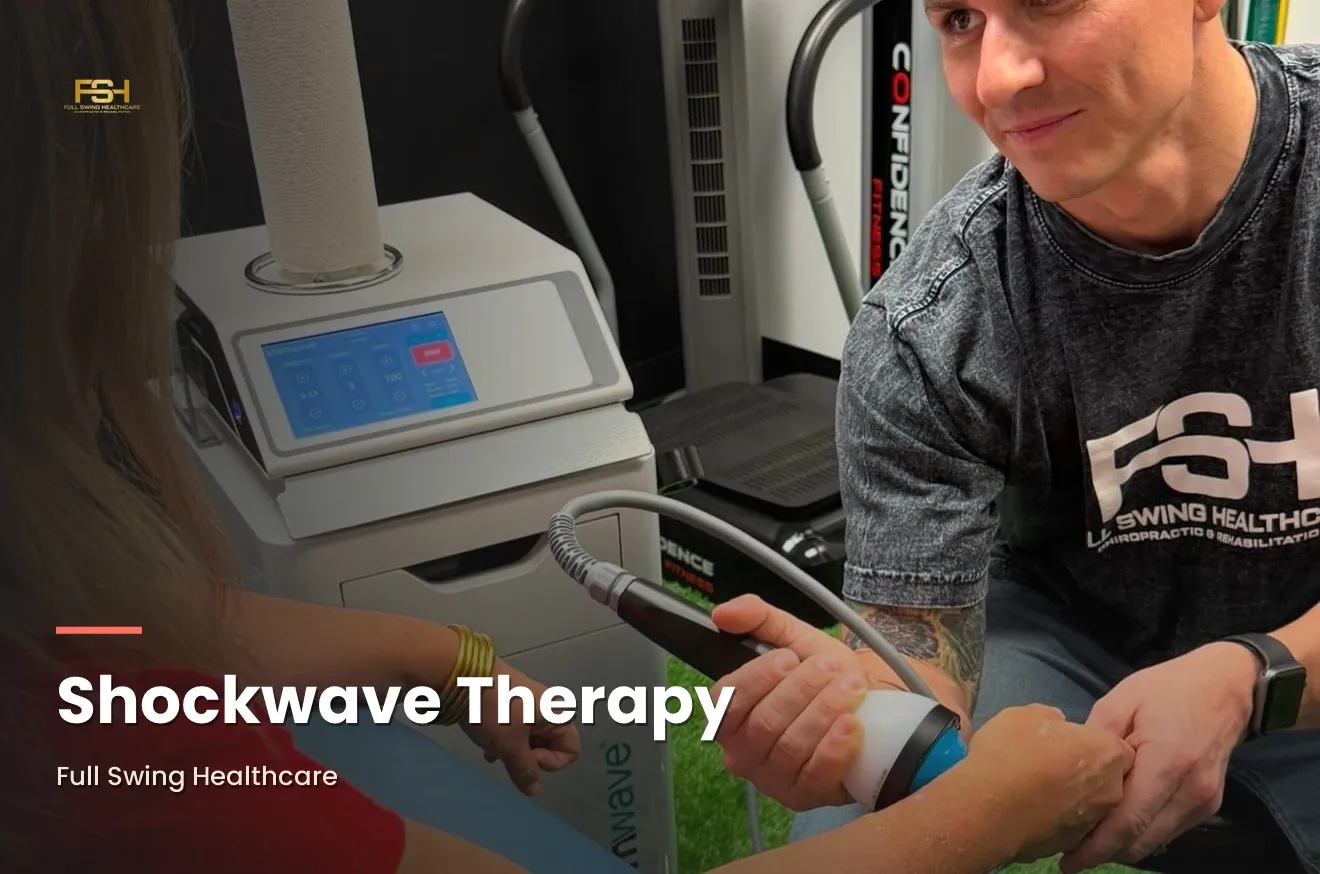
Some injuries just won’t quit, and that is where shockwave therapy in Jacksonville comes in. You rest it, you ice it, you stretch it, and the second you get back on the board at Jax Beach or back into your running shoes, the same heel or tendon flares right back up. Shockwave therapy is built for exactly those stubborn cases: a non-invasive, drug-free way to wake up healing in tissue that has been stuck for months.
What shockwave therapy actually is
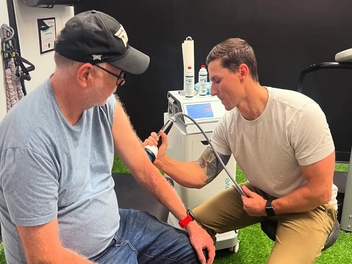
Despite the name, there is no electricity involved. Shockwave therapy (sometimes called acoustic-wave therapy, or by its clinical name, extracorporeal shockwave therapy or ESWT) delivers focused pulses of acoustic energy through a handpiece pressed against the skin. Dr. Muren uses the StemWave device to send those waves into the deeper soft tissue, where they tell your body to do something it stopped doing on its own: send fresh blood flow to the area, break down calcified or scarred tissue, and restart the natural repair process.
Think of it as a controlled nudge. Chronic tendon problems often get stuck in a low-grade, half-healed state, and after a few months the body quietly reclassifies the injury as permanent and stops sending repair resources. The acoustic pulses create a small, intentional irritation that flips your body back into active-healing mode, without surgery, without needles, and without downtime.
What the acoustic pulse actually does to the tissue
The mechanism has a name: mechanotransduction. Cells read mechanical force and convert it into chemical signalling, which is the same principle behind why loaded bone gets denser and why a tendon rebuilds around the demand you place on it. A shockwave pulse delivers that mechanical input to tissue that has stopped responding to ordinary loading, at an intensity and a depth you cannot reach by stretching.
Two things follow. The first is angiogenesis, the growth of new small blood vessels into the treated area. Chronic tendon and fascia problems are typically poorly supplied with blood, and that lack of supply is a large part of why they stall, so improving the plumbing matters more than it sounds. The second is a shift in the local chemistry, where growth factors go up and the pain signalling from the area is turned down. That combination is why relief often arrives before the tissue itself has finished remodelling, and why the series is spaced across weeks rather than crammed into one week.
Ours is focused electrohydraulic, and that difference is the whole point
Shockwave devices split into two families, and the marketing rarely explains it. Radial pressure wave machines, sold as RSWT or under names like EPAT, spread their energy out from the applicator head, so the effect is strongest at the surface and fades quickly with depth. They are the cheaper and far more common machine, and they are the reason many people have tried “shockwave” and felt nothing much happen.
Focused shockwave concentrates the energy at a set depth below the skin instead of scattering it, so the strongest part of the wave arrives at the tissue you are actually treating. Within focused devices, the generator matters too: electrohydraulic generation produces a true focused shockwave with the highest peak pressure and the deepest penetration of the available methods.
The StemWave device we use is focused and electrohydraulic, which is the most specific and deepest penetrating combination there is. Practically, that means a hip, a deep glute insertion or a calcific deposit in the shoulder is reachable here, where a radial machine would spend most of its energy on the tissue above it. If you have had shockwave elsewhere without result, ask what machine it was. There is a good chance it was radial. It is also why we did not buy a laser: our reasoning on cold laser therapy compares the two directly, and the same thinking is why we pass on EMTT therapy.
The number that actually describes a machine’s output is energy flux density, measured in millijoules per square millimetre, alongside how many pulses are delivered per session and at what frequency. Broadly, work under about 0.1 mJ/mm² counts as low energy and higher settings as medium or high, and protocols in the research usually pair an energy level with a pulse count, for example a few thousand pulses per site per session across three to five sessions. Ask any clinic what device they run, which family it belongs to, and how many pulses you are getting. A clinic that cannot answer that is selling you a name rather than a dose.
“Dr. Hall used the stem wave on my knee that had chronic pain and inflammation for five years. The pain is completely gone now and I could not be more grateful.”
JL Julie Layher
Jacksonville
What shockwave therapy helps with
Shockwave earns its keep on chronic, stubborn tendon and fascia problems, the ones that have hung around for six weeks or longer and shrugged off rest and stretching. The cases we treat most:
Plantar fasciitis
This is the most common reason we reach for shockwave. That stabbing, first-step-in-the-morning heel pain comes from thickened, degenerated tissue at the heel and arch that often ignores stretching, night splints, and cortisone. Acoustic-wave therapy is one of the most studied treatments in this area, and it drives blood flow and repair back into tissue that had stopped healing. See our plantar fasciitis care for the full picture.
Achilles tendinopathy
Common in runners and anyone logging miles on the sand. The middle of the Achilles gets very little blood supply, which is a big reason it degenerates and struggles to heal on its own. Shockwave drives fresh blood flow straight into that starved zone, and for athletes who have been managing Achilles pain for a season without progress, it is often the piece that finally tips things.
Calcific shoulder and rotator cuff tendinitis
Calcium deposits can build up in the rotator cuff tendons and make every overhead reach painful, and they tend to resist cortisone. Shockwave mechanically breaks up the deposit so the body can reabsorb it, which makes it one of the few non-surgical options that actually changes the tissue instead of just masking the pain.
Patellar (jumper’s) knee
The patellar tendon takes a beating in anyone who jumps, decelerates, or trains on hard surfaces, and it degenerates at the bottom of the kneecap into chronic front-of-knee pain. Paired with the right loading and rehab, shockwave consistently does better than rest alone, and it does it without pulling you out of training entirely while the tendon rebuilds.
Tennis and golfer’s elbow
Both are overuse tendon injuries at the elbow, on the outside (tennis elbow) or the inside (golfer’s elbow), where the tendon has filled with disorganized, degenerated collagen that never remodeled. Shockwave stimulates fresh collagen right at the sore insertion point. For Jacksonville golfers playing through elbow pain out at TPC Sawgrass and Ponte Vedra, it is often the first thing that produces lasting change.
Chronic sports and overuse tendon injuries
Nagging hamstring, hip, and other overuse tendon pain that keeps coming back after rest usually responds to the same approach: restart the repair the body abandoned, then rebuild the tissue with progressive loading. Deep hamstring pain at the sit bone, for example, is often mistaken for sciatica and left untreated for years before shockwave and loading finally resolve it.
“I tore my meniscus about 6 years ago and never did anything about it. I found Dr. Muren from a video on TikTok performing shockwave therapy. After six sessions I can sprint again.”
JE James Elliott
Jacksonville
Shockwave shines on chronic problems, the ones that have hung around for six weeks or longer. If your injury is brand new and still hot and swollen, we may calm it down first with other tools before bringing shockwave in. It is powerful, and it matters that it is aimed correctly, so we always assess before we treat. A few situations mean shockwave is not the right call, including active cancer near the treatment area, a blood-clotting disorder, a local infection or open wound, or pregnancy over the treatment site. Dr. Muren reviews your history and confirms it is safe before the first session.
How shockwave compares to cortisone, ultrasound, and rest
If you have been fighting a stubborn tendon, you have probably already tried the usual options. Here is where shockwave fits, and why it often works when the others stall.
Shockwave vs cortisone
A cortisone shot calms inflammation and can buy real short-term relief, but it does not rebuild tissue, and repeated injections can actually weaken a tendon over time. Shockwave takes the opposite approach: instead of quieting the symptom, it stimulates the tissue to repair itself, which is why the results tend to hold longer for chronic tendon problems. Cortisone does have its place: for an acute inflammatory flare-up, a fresh bursitis or post-surgical swelling, calming the response quickly is often the right first move. Timing matters too, because a cortisone injection shortly before shockwave can blunt the result, dampening the very inflammatory response shockwave is meant to start. Tell us if you have had a recent injection.
Shockwave vs therapeutic ultrasound
They sound similar but are not close. Therapeutic ultrasound uses gentle, continuous waves to warm surface tissue. Shockwave delivers focused, higher-energy pulses that reach deeper and actively remodel degenerated tissue and break up calcium deposits. One is a warming tool; the other is a repair tool.
Shockwave vs more rest
Rest helps a fresh, acute injury. For a chronic problem that has been around six weeks or longer, more rest usually does nothing, because the tissue has already stopped healing. Shockwave restarts the process that rest alone cannot.
Your Jacksonville shockwave therapy clinic
Full Swing Healthcare sits at 13770 Beach Blvd, minutes from Jacksonville Beach, Neptune Beach, Atlantic Beach, and Ponte Vedra Beach, so advanced shockwave care stays close to home for the whole east side. Jacksonville stays active year-round on tile, concrete, and sand, and the posterior chain never gets a real seasonal rest, which is part of why heel and tendon problems here tend to be more stubborn than in places where people stop training in the cold months. Same-day appointments are often available, and because we keep shockwave, chiropractic, and rehab under one roof, you can handle a combined visit in a single trip.

Who performs your shockwave therapy
Your shockwave sessions are performed by Dr. Cody Muren, DC, a Palmer College graduate (Florida license CH12412), often working alongside Dr. Eric Hall, DC. We were one of the first clinics in Jacksonville to bring in this technology, and Dr. Muren uses the StemWave device constantly, because it solves the exact problem that used to leave patients stuck between endless PT and surgery.
Because he combines shockwave, chiropractic, and soft-tissue work on a single plan, the injured tissue and the mechanics that caused it get handled in the same visit, instead of at three clinics that never talk to each other.
What to expect
Assessment first
We never start with the machine. Your first visit is a real evaluation. We figure out whether your pain is genuinely a tendon or fascia issue, whether any mechanical problem is feeding it, and whether shockwave is the right call. If it is not, we will tell you.
The session
We apply a little gel, then move the handpiece over the target area in a steady pattern. You will feel a deep, rapid tapping with real intensity right over the sore spot, dialed to a level you can handle. Most people rate it a 4 or 5 out of 10. Each session runs about 5 to 10 minutes of active treatment per site.
A short series
Shockwave works cumulatively. Most people do a series of roughly 3 to 6 sessions spaced about a week apart, and Dr. Muren reassesses after the third. The day after a session the area can feel a little sore, which is the healing response the treatment is meant to trigger, and it settles within a day or two.
Back to your life
There is no recovery time. You can drive home and go about your day. We will just ask you to ease off heavy loading of the area for a day or two so the healing response can do its work.
5 to 10 min per treatment
3 to 6 typical sessions
Zero downtime after
Made for athletes, and anyone on their feet
Surfers, runners along the beaches, golfers out at TPC Sawgrass, and weekend warriors love shockwave because it gets stubborn tendons moving again without sidelining them for weeks. But you do not have to be an athlete. If you are a nurse, a server, or a parent who has been limping on a sore heel for half a year, this is one of the most effective tools we have for getting you back in full swing.
Shockwave rarely does its best work alone. Shockwave heals the soft tissue; a chiropractic adjustment fixes the structural problem underneath. Treating one without the other is like patching a tire without fixing the alignment that caused the blowout, so we often pair shockwave with an adjustment, myofascial scraping, or targeted rehab and build the plan around your body, not a template.
Pair it with
Shockwave therapy FAQs
Does shockwave therapy hurt?
You will feel a strong, deep tapping right over the tender area, and the spot that hurts will feel the most intense. It is very tolerable. We adjust the intensity to your comfort and turn it up as you get used to it, and most people rate it a 4 or 5 out of 10.
How many sessions will I need?
Most patients do a series of about 3 to 6 sessions, spaced roughly a week apart. Dr. Muren reassesses after the third session: if the tissue is responding we continue, and if it is not, we revisit the diagnosis. We do not run open-ended plans.
How soon will I feel results?
Many people feel some relief after the first one or two sessions, but shockwave works cumulatively. The tissue keeps rebuilding for weeks after the series ends, so the biggest improvements often show up a month or so out.
Is there any downtime?
None. You can drive yourself home and return to normal activity the same day. We just recommend going easy on heavy loading of the treated area for a day or two so the healing response is not interrupted.
How is shockwave different from ultrasound?
They are not close. Therapeutic ultrasound uses gentle, continuous waves to warm surface tissue. Shockwave delivers focused, higher-energy pulses that reach deeper, remodel degenerated tissue, and break up calcium deposits.
How much does it cost, and does insurance cover it?
Your first shockwave session is $49. After that, the cost depends on how many areas of the body we treat, so we go through the exact price with you at that first visit, before anything is booked. Insurance coverage for shockwave varies and many plans do not cover it yet, so we check your benefits and give you exact pricing up front.
Where can I get shockwave therapy for plantar fasciitis in Jacksonville?
If heel pain has followed you through months of stretching, orthotics, and physical therapy without budging, shockwave therapy may be the missing piece. At Full Swing Healthcare, we use the StemWave device to treat chronic plantar fasciitis, and we see good, lasting outcomes with it regularly. Most cases of plantar fasciitis that have been around for three months or less respond well to conservative care: calf stretching, load management, better foot mechanics.
Does shockwave therapy in Jacksonville work for tendonitis or tennis elbow?
Yes, tennis elbow and tendonitis are among the strongest clinical applications for shockwave therapy, and we see consistent results at Full Swing Healthcare. If your elbow pain has stuck around for months despite rest, ice, or even a cortisone shot, shockwave is worth a close look. Tennis elbow (lateral epicondylitis) starts as inflammation where the extensor tendons attach at the elbow.
Where can I get shockwave therapy for hip bursitis in Jacksonville?
We treat lateral hip pain, trochanteric bursitis and gluteal tendinopathy, with shockwave therapy right here in Jacksonville. If you’ve had cortisone injections that worked for a while and then stopped, shockwave combined with correcting hip mechanics is typically what finally produces lasting relief. What most people call trochanteric bursitis is increasingly recognized in the research as gluteal tendinopathy : specifically degeneration of the gluteus medius and minimus tendons where they attach at the greater trochanter.
Shockwave therapy vs. physical therapy for plantar fasciitis in Jacksonville
Both shockwave therapy and physical therapy work for plantar fasciitis, but they work at different stages. Physical therapy addresses the mechanical reasons your fascia is being overloaded. Shockwave addresses the tissue itself when it has stopped healing on its own.
Which clinic offers shockwave therapy for shoulder pain in Jacksonville?
For shoulder pain, shockwave suits rotator cuff tendinopathy and calcific tendinitis that hasn’t budged with traditional rehab. Our StemWave device delivers focused acoustic waves that restart the tissue repair process right at the source. For most shoulder problems, strengthening the rotator cuff, improving scapular mechanics, and restoring range of motion is exactly the right starting point, and it works well for acute or early-stage issues.
Which clinic in Jacksonville offers shockwave therapy for back pain?
Back pain is a narrower case: chronic fascial and tendinous conditions of the low back that haven’t fully responded to chiropractic, dry needling, or soft tissue work. It’s not the first tool we reach for, but for the right presentation it can make a real difference when other approaches have plateaued. Shockwave therapy targets tissue that has stopped healing on its own.
Does shockwave therapy work for rotator cuff injuries in Jacksonville?
Yes, for the right rotator cuff conditions, shockwave therapy works well. It is most effective for supraspinatus tendinopathy and calcific tendinitis once the problem has moved into a chronic, degenerative phase. For acute tears or full-thickness structural tears, shockwave is not the right tool, and we will tell you that directly rather than take your money.
Where can I get shockwave therapy for Achilles tendon pain in Jacksonville?
Achilles tendon pain is one of the conditions we treat most often from Jacksonville’s running and athletic community. If your Achilles has been hurting for more than three months and loading programs have stopped making progress, shockwave is the most effective conservative option available. Where the pain lives on your Achilles actually changes how we treat it.