
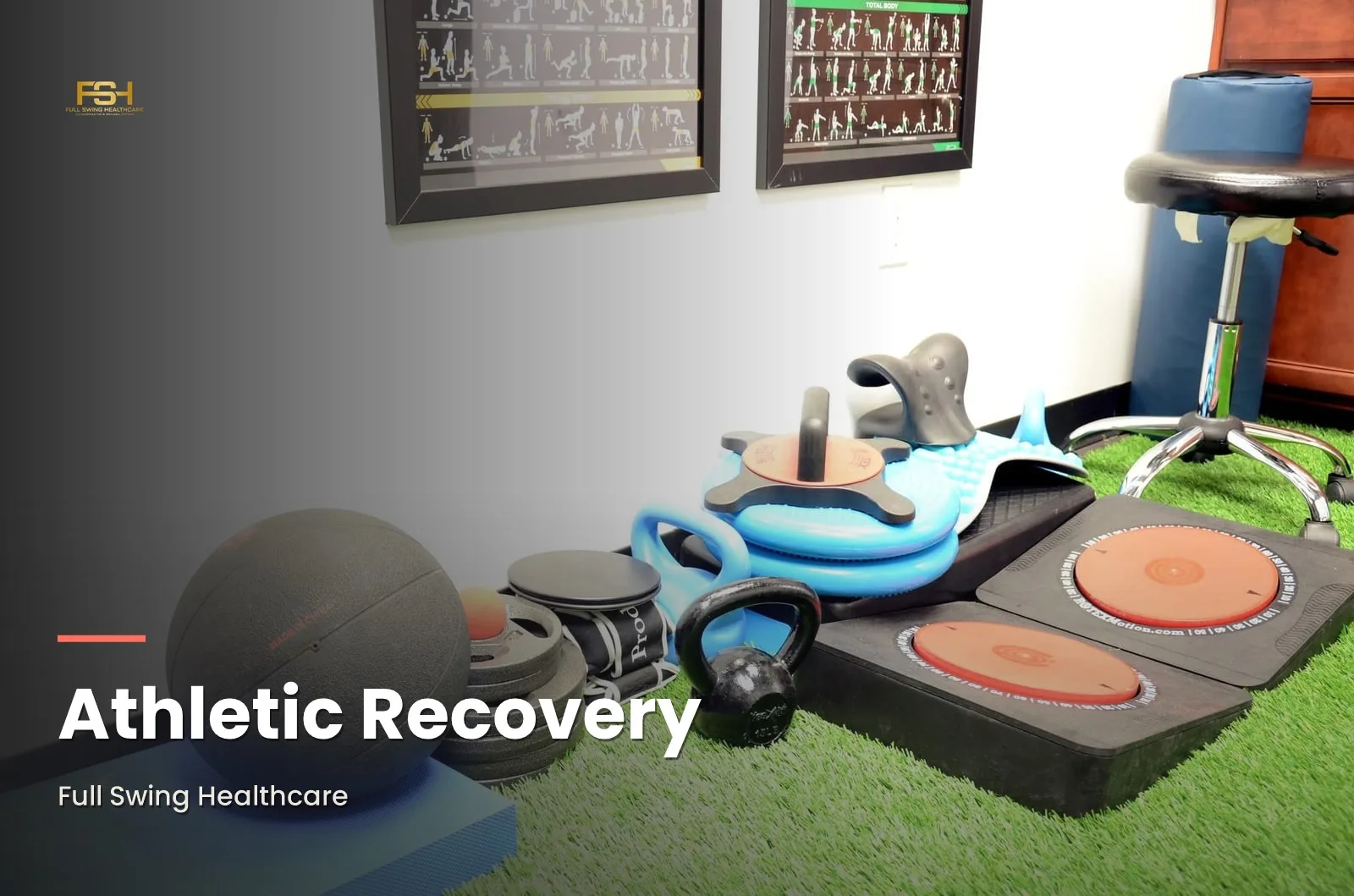
Whether you’re paddling out at Jacksonville Beach before work, chasing a half-marathon PR along the A1A, grinding through a round at TPC Sawgrass, or hitting a new squat number, your body takes a beating that a good sports chiropractor in Jacksonville knows how to undo. Athletic recovery at Full Swing Healthcare is the structured plan that gets you back to your sport faster, moving better, and breaking down less often.
What athletic recovery really is
This isn’t a quick crack and a “see you next week.” It’s assessment-led sports rehab built around how you actually move. We start with a real exam, checking joint mobility, soft-tissue quality, movement patterns, and the specific demands of your sport, then build a recovery and performance plan from the right mix of tools. Because we keep the whole toolbox under one roof, we don’t force every athlete into the same protocol. A surfer with cranky shoulders and a runner with a stubborn Achilles get very different care.
The goal is simple: relieve what hurts now, restore full motion, and address the reason it happened so it doesn’t keep coming back. That’s the difference between treating a flare-up and actually getting you back in full swing.
“Dr. Muren has gone above and beyond to help me recover from chronic neck, back, and shoulder pain. As a washed up former athlete with dreams of competing again, this has been huge.”
DR Devin Root
Who guides your recovery
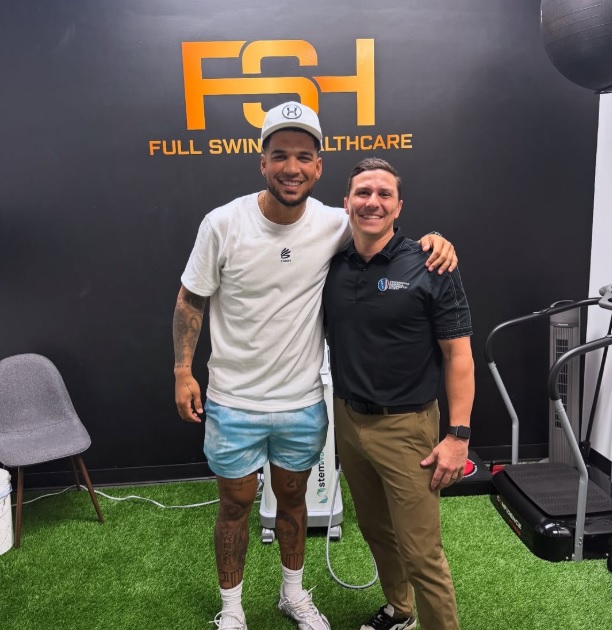
Your care is led by Dr. Cody Muren, DC, a Palmer College graduate, and Dr. Eric Hall, DC. Both have competed, so the conversation starts from a place most clinics can’t offer: they know the difference between pain you can train through and pain that turns into a season-ending problem if you ignore it.
Dr. Muren is the current treating chiropractor for the Jacksonville Jumbo Shrimp, which means he spends his season with athletes who cannot simply stop and rest, and he is also an official sponsor of the FSCJ Volleyball program. He reads the movement pattern behind the pain, not just the sore spot, and treats both. Dr. Hall earned his Kinesiology degree at Jacksonville University and is a former football and baseball athlete himself, so he understands what it means to weigh recovery against a season that won’t wait. That context changes every plan we build.
What we help with
- Overuse and repetitive-strain injuries like runner’s knee, tendinitis, and shin splints
- Stiff, restricted joints that rob power from your swing, stride, or paddle
- Stubborn soft-tissue knots and scar tissue that limit range of motion
- Recovery between hard training blocks, races, and tournaments
- Nagging shoulder, hip, low-back, and ankle issues that won’t fully settle
- Injury prevention: finding the weak link before it becomes a sidelining injury
Common sports injuries we treat in Jacksonville
Year-round training weather means year-round injuries. Here’s what we see most often, and how we approach each one.
Shoulder injuries
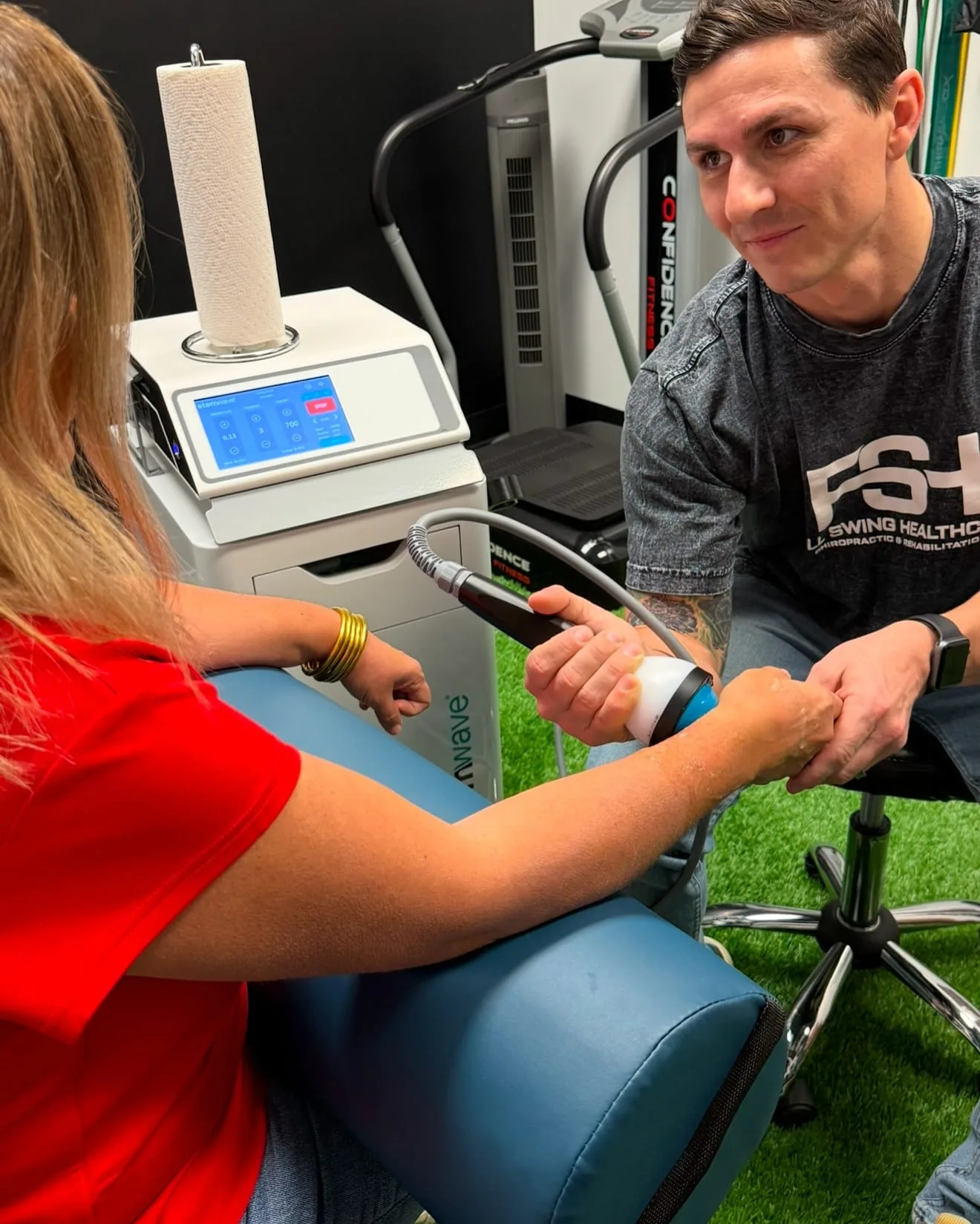
Rotator cuff strains, impingement, and biceps tendon pain are common in throwing athletes, swimmers, and anyone who trains overhead. We restore shoulder and mid-back mechanics with adjustments, use shockwave therapy on stubborn tendon pain, and free up restriction with myofascial scraping. Then we rebuild the shoulder-blade control that keeps it from coming back.
Knee injuries
Runner’s knee, IT band syndrome, and jumper’s knee usually aren’t really knee problems. Most are driven by the hip or the ankle changing the forces through the joint, which is why treating the knee alone lets the pain keep returning. We trace it upstream, then use myofascial cupping along the tight outer hip and thigh to take the pressure off the joint.
Low back and hip injuries
Low-back strain, SI joint pain, hip-flexor strains, and deep glute pain are common in golfers, rotational-sport athletes, and heavy lifters. Dr. Muren’s golf-swing background is directly relevant here: he’s assessed a lot of rotational back injuries and knows the loading patterns that create them, so the fix targets the cause rather than just calming the symptom.
Ankle and foot injuries
Old ankle sprains that never fully healed, Achilles tendon pain, and plantar fasciitis all respond well to care. Plantar fasciitis is especially common in our running community, and the combination of shockwave therapy with hands-on soft-tissue work is the most effective drug-free option we have for these stubborn foot and ankle cases.
How we get you back faster
We combine modalities so each one does what it does best. That’s how recovery speeds up instead of stalling. Depending on your assessment, your plan might pull from:
Assess and adjust
A full movement and joint evaluation, then targeted chiropractic adjustments to restore mobility where you’ve lost it, so force moves through your body the way it should.
Release the tissue
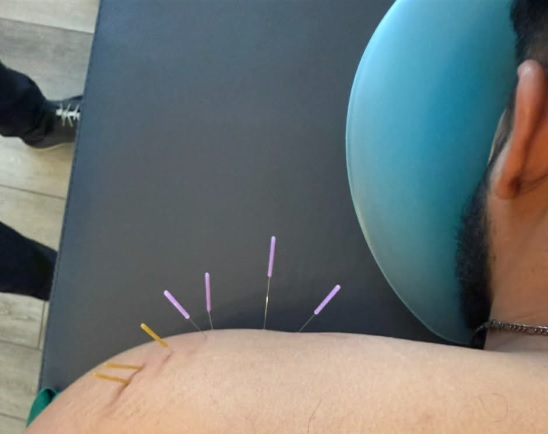
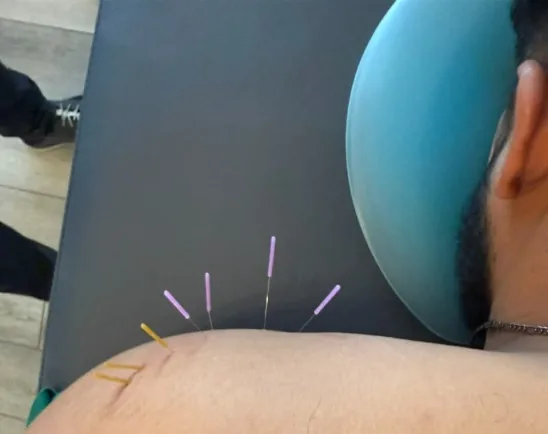
Myofascial scraping and cupping to break up adhesions and free tight fascia, plus dry needling to shut down the trigger points choking your power and range.
Jump-start healing
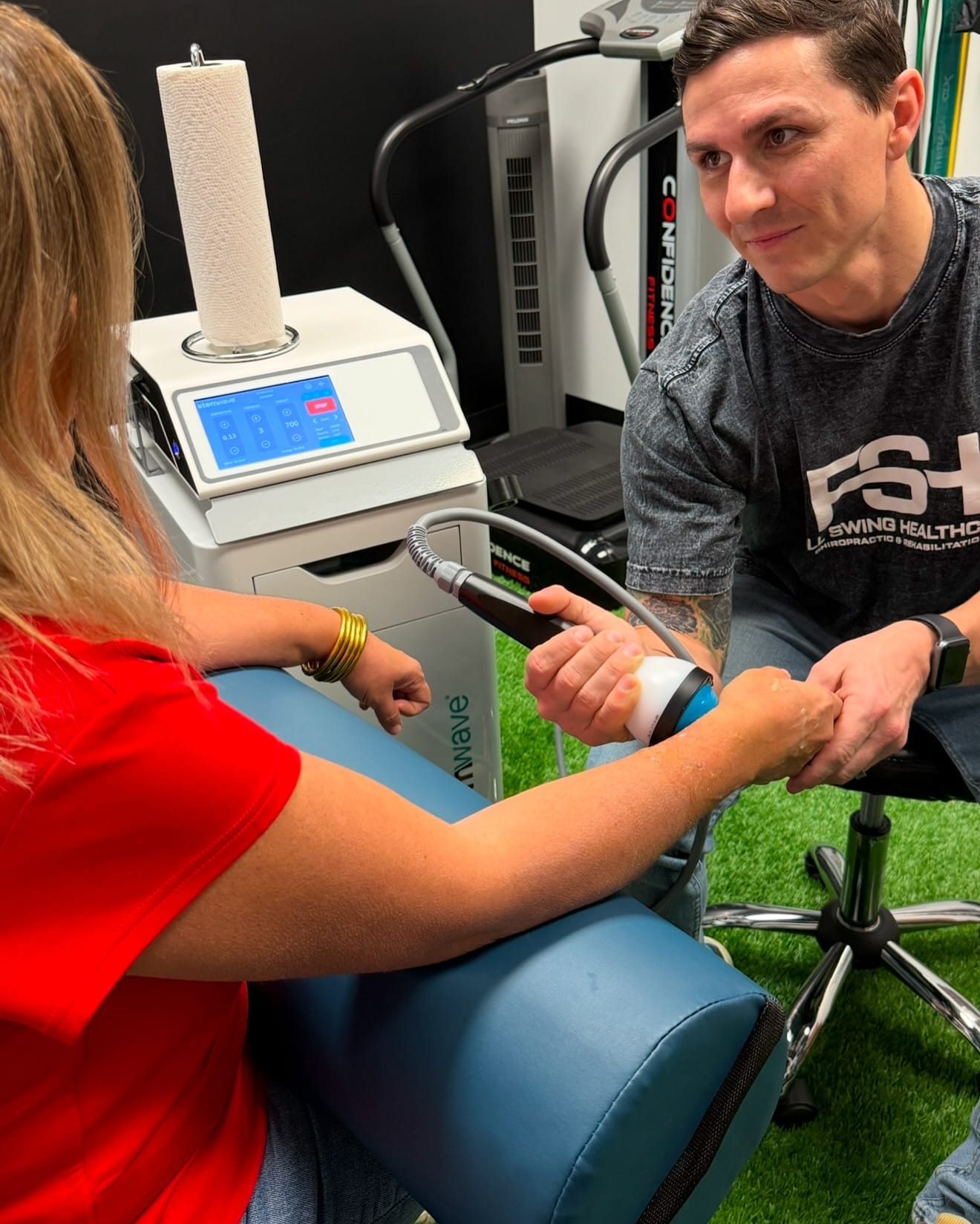
Shockwave therapy for stubborn tendon and soft-tissue injuries (plantar fasciitis, Achilles, tennis elbow) that haven’t budged with rest alone.
Rebuild and reinforce
Practical movement and loading strategy so the fix holds and you come back stronger than before the injury.
Tape it for the days between visits
Kinesiology taping, the stretchy coloured tape you see on shoulders and knees at any start line, applied to give a joint feedback or to take a little load off an irritated tendon while you keep training. It is a support between sessions, not a treatment on its own, and we will tell you when it is doing nothing for you.
Rest is not a recovery plan. Rest is what happens when no one has a better idea. The injuries that sideline athletes are rarely the dramatic ones. They’re the hamstring that came back at ninety percent and got loaded too soon, or the shoulder that nagged all season because the original mechanical problem was never corrected. We call the alternative directed repair: fix the joint, clear the tissue, rebuild the pattern, in that order.
Every sport, every level
We treat athletes from high school to weekend warrior to seasoned competitor, and the patterns are real and local.
Golfers at TPC Sawgrass and Ponte Vedra
Jacksonville’s year-round golf season means these athletes never get an offseason for restrictions to quietly resolve. Limited hip and mid-back rotation forces the low back to absorb what the swing should distribute, which is where most golf back pain comes from. We measure the rotation available at each level, then tie the pain complaint to the restriction behind it and address both at once.
Runners and the Gate River Run
With the Gate River Run every March and a steady calendar of half and full marathons, local runners train in cycles almost year-round. Flat terrain is kind to mileage and hard on the outer leg and foot, so we see IT band syndrome, plantar fasciitis, Achilles pain, and SI joint trouble again and again. We treat the injury and pinpoint the training-load or mobility habit that keeps producing it.
Strength and CrossFit athletes
Heavy training under fatigue loads the low back, shoulders, and hips in predictable ways. These athletes know what they’re doing and don’t want to be told to stop. So the answer here is rarely “quit lifting.” It’s an honest read on what’s structurally happening, plus a modified plan that tells you exactly what you can load and what you can’t while the injury settles.
Student and youth athletes
Young athletes from Fletcher, Sandalwood, Bartram Trail, Atlantic Coast, and Nease come in regularly. Growing bodies need different handling, because in a young athlete the growth plate is often the vulnerable structure, not the muscle or tendon. Most of these issues are very manageable with load changes and treatment, and only turn serious when they get pushed through a full competitive season. We work around school and game schedules so early care is easy to get.
What “ready” actually means
Most athletes get cleared to return the moment their pain is gone. Pain going away is a starting point, not a finish line. The re-injuries that show up within weeks of a comeback almost always trace to returning at full load before tissue quality, movement, and strength were truly restored.
At Full Swing, we measure readiness against real markers, not just how you feel. The tissue has to be comfortable under sport-specific load, not only at rest. Side-to-side strength needs to be close to even for lower-body injuries, and closer still before you return to cutting and sprinting. And the movement pattern that caused the injury in the first place has to be addressed, because it reasserts itself the moment you get tired. For in-season athletes the aim shifts to maintenance: a monthly visit that keeps joints mobile and tissue healthy is far less disruptive than two weeks lost to an injury that had been building for six.
Written down, return to play criteria are simple enough to hold yourself to. Full pain free range compared against the other side. Strength within roughly ten percent of the uninjured limb, tested rather than assumed. Hopping, cutting and changing direction without hesitation, because guarding shows up in movement long before it shows up in a number. Sport specific work at full speed with no flare the following day. Feeling ready is the last item on that list, not the first.
Managing training load, the injury nobody sees coming
Most overuse injuries are not caused by a bad movement. They are caused by too much change too quickly. Tissue adapts to the load you give it, but it adapts on a slower clock than motivation does, which is why injuries cluster in the weeks after a training block gets suddenly harder, after a new sport is added, or after time off is followed by picking up where you left off.
What matters is the relationship between this week and the weeks behind it. Sharp jumps in volume or intensity are where tissue gets caught out, and the usual guidance is to raise weekly load in modest steps rather than in leaps. Heat is a local factor here, since training year round in Jacksonville humidity means fatigue arrives earlier in a session and form degrades before the schedule says it should. Sleep, sudden surface changes (road to sand, court to grass), and new footwear belong on the same list. A recovery plan that never asks what changed three weeks ago is treating the symptom.
Your Jacksonville sports chiropractic clinic
Full Swing Healthcare sits at 13770 Beach Blvd #4, minutes from Jacksonville Beach, Neptune Beach, Atlantic Beach, and Ponte Vedra Beach, so sports chiropractic care stays close to home whether you train on the sand or on the course. Same-day appointments are often available, and because every recovery tool lives under one roof, you can pack an adjustment, soft-tissue work, and shockwave into a single visit instead of driving all over town. With clear pricing ($50 per follow-up), keeping recovery on schedule stays easy even in a busy training week.
“We come into town from Orlando to see him. He was an athlete himself, so he understands how my husband and son need to be adjusted. 100% recommend him.”
DG Debra Gutierrez
Jacksonville
Assessment first, always. We won’t guess. Your first visit is a full exam ($115, exam included) so we know exactly what’s limiting you before we build your plan, not a one-size-fits-all protocol.
2017 caring for Jacksonville athletes since
205+ five-star Google reviews
1 roof every recovery tool in one place
“Dr. Muren helped my son recover from a baseball injury that kept him in the game, and showed him how to prevent further injuries with proper warm ups and stretching.”
LJ Lillian Jacoby
Pair it with
- Peptide Injections: prescriber-led peptide therapy, assessed first
Common questions
Do I need to be a competitive athlete to come in?
Not at all. We treat weekend warriors, student athletes, and anyone active: surfers, runners, golfers, lifters, and people who just want to move well. If your activity matters to you, you’re our kind of patient.
How many visits will I need?
It depends entirely on the injury and your goals, which is why we assess first. Some athletes need a short tune-up. Stubborn tendon issues treated with shockwave usually run a series of sessions.
How do you decide when I’m ready to return to my sport?
We look at real markers, not just whether the pain is gone. The tissue has to hold up under sport-specific load, your strength needs to be roughly even side to side, and the movement pattern that caused the injury has to be corrected so it doesn’t reassert itself once you get tired. That’s how we lower the odds of a quick re-injury.
Can you help me prevent injuries, not just treat them?
Yes. A big part of athletic recovery is spotting the weak link, whether it’s a stiff joint, a movement habit, or a tight chain, before it turns into a sidelining injury. Prevention is built into the plan.
What does it cost?
Your first visit is $115 and includes a full exam. Follow-up visits are $50, and adding an adjustment to any treatment is $30. We also accept Florida Blue, United Healthcare, Humana, Cigna, Florida Medicaid, and VA.
Can a chiropractor help improve golf swing mobility in Jacksonville?
Yes, and at Full Swing Healthcare, this is a specialty, not a sideline. Dr. Cody Muren holds a TPI (Titleist Performance Institute) Certification, which means we assess golfers the same way the Tour’s best trainers do: find the physical limitations that are quietly wrecking your swing, then fix them. The TPI physical screen evaluates 12 movement patterns that predict swing faults and injury risk.