Yes, Full Swing Healthcare works with postpartum patients recovering from C-section deliveries. We typically begin care at eight to twelve weeks post-surgery, after your OB gives you the green light. C-section recovery has specific physical considerations that differ from vaginal delivery, and we assess for every one of them from the first visit.
What a C-Section Does to Your Spine and Pelvis
The surgical incision and the internal manipulation of the uterus both leave scar tissue that can tighten the connective tissue (fascia) running across the front of your abdomen. That restriction pulls forward on the lumbar spine and pelvis, which most patients feel as a persistent tugging or tightness low in the belly, and it shows up as back pain, altered posture, and difficulty activating the deep core.
The scar tissue also matters for diastasis recti recovery. If the anterior fascial layer is restricted, the deep abdominal muscles struggle to fire correctly, which slows pelvic-floor and core rehab considerably.
On top of the incision itself, the positioning required during and after surgery, lying flat for extended periods, guarded movement while the incision heals, creates thoracic and lumbar restrictions that often weren’t there before delivery. We address both pieces: the scar tissue and the compensatory spinal patterns.
How We Treat It
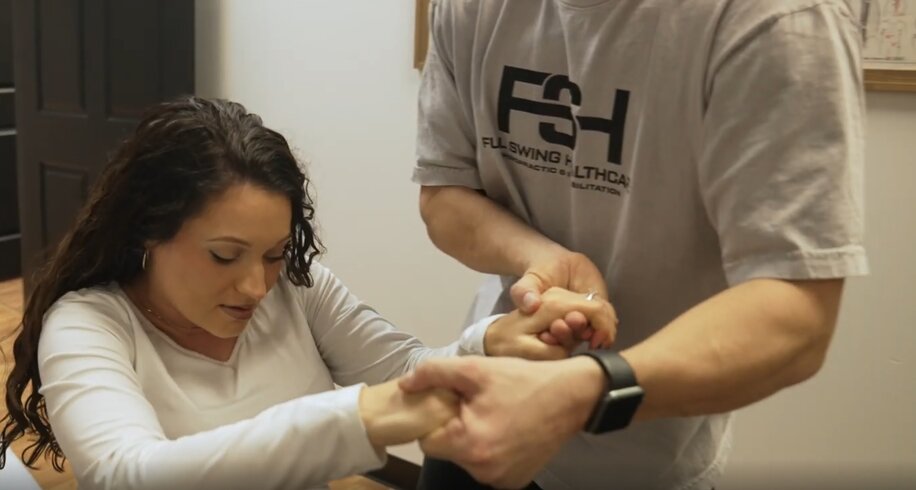
- Adjustments in side-lying or seated positions only, no prone (face-down) pressure over the incision site in the early weeks.
- Gentle, low-force technique calibrated to your healing stage and comfort level.
- Once the incision is fully healed and scar tissue has matured, we add myofascial release and IASTM (instrument-assisted scraping) directly to the scar tissue region to restore fascial mobility.
- Guidance on core reconnection and posture for feeding, carrying, and getting in and out of bed, the everyday movements that load a healing body the most.
Timing and Medical Clearance
Eight weeks is the minimum starting point for most C-section patients, but some bodies need more time and that is completely normal. We defer to your OB’s clearance and work within whatever parameters they specify. When you come in, bring any relevant notes or instructions from your OB, it helps us tailor care from day one.