
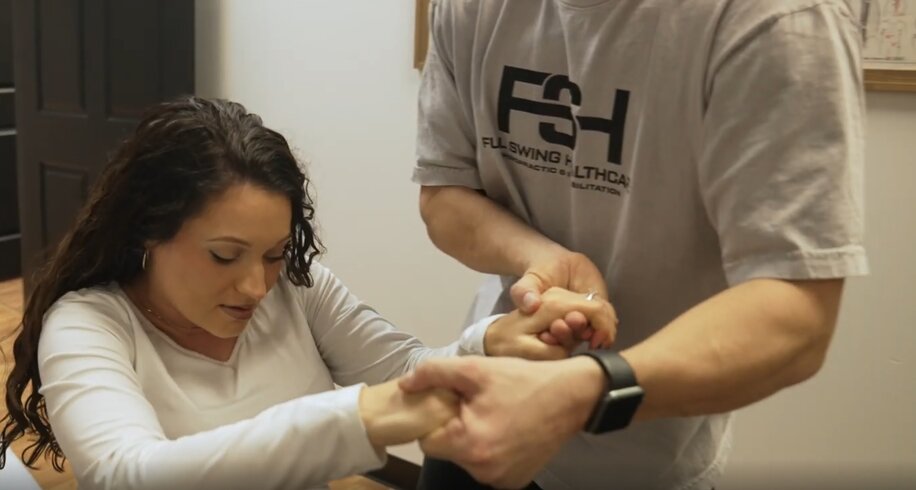
Full Swing Healthcare offers a sacropelvic technique during pregnancy that follows the same principles as the Webster protocol, assessing sacral restriction and releasing uterine ligament tension to reduce maternal discomfort and support optimal fetal positioning. Dr. Cody Muren is not yet ICPA Webster Certified, so we don’t advertise under that name, but the clinical approach and outcomes are the same.
What the Sacropelvic Approach Actually Does
The Webster protocol was developed by Dr. Larry Webster and is promoted by the International Chiropractic Pediatric Association. It involves a careful analysis of the sacrum and sacroiliac joints, combined with targeted soft tissue release of the round and broad ligaments of the uterus. The goal is to reduce asymmetric tension in the uterine environment, tension that can contribute to maternal pain or limit the space available for the baby.
One important thing to understand: this is not a baby-turning procedure. Chiropractors do not manually reposition babies. What the technique does is create a more balanced intrauterine environment through pelvic correction. Whether the baby moves into an optimal position depends on factors well beyond the pelvis, but many moms find their comfort improves significantly regardless.
Common Pregnancy Complaints We Treat
Pregnant patients come to us with a range of sacropelvic complaints, and this approach tends to address several of them at once:
- Round ligament pain
- Sacroiliac (SI) joint pain
- Pubic symphysis dysfunction
- Low back and sacral pain
Rather than needing separate treatments for each issue, the sacropelvic assessment captures all of them as part of the same evaluation and correction. Many patients come in focused on one complaint and leave surprised at how much the connected structures respond together.
Care Through All Three Trimesters
We adapt positioning and technique at every stage of pregnancy. First trimester patients are typically seen with minimal modifications. As your pregnancy progresses into the second and third trimesters, we shift to side-lying, seated, or drop-table setups that keep you comfortable and fully supported, no lying flat on your belly. Safety and comfort are reassessed at each visit, not just at intake.