
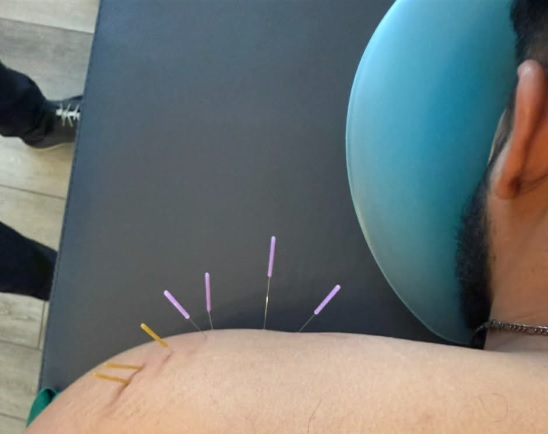
Yes, dry needling can be a powerful tool for sciatica, but the answer depends on what’s actually driving your pain. If piriformis muscle spasm is compressing the sciatic nerve, dry needling is extremely effective. If a disc bulge at L4-L5 or L5-S1 is the culprit, needling still addresses the muscular component while chiropractic care and decompression handle the disc. Most sciatica patients need both.
The Piriformis Problem Most Doctors Miss
The piriformis muscle sits deep in your posterior hip, right alongside the sciatic nerve. When it locks up with active trigger points, it shortens and presses the nerve against surrounding tissue, producing deep gluteal pain that radiates down the back of your leg, sometimes all the way to the calf. That symptom picture is nearly identical to disc-driven sciatica, which is why it’s so commonly misdiagnosed.
The clue is in what makes it worse. Piriformis syndrome flares with sitting and internal hip rotation. Disc-driven sciatica worsens with lumbar flexion and coughing. Most patients who’ve been chasing sciatica for months have never had anyone test for the difference.
A Real Case From the Jacksonville Southside
A patient came to us from the Southside after three months of right-sided sciatica. His primary care doctor had pointed to an L5-S1 disc bulge on MRI, a real finding. But when Dr. Muren tested hip rotation, the sciatic referral reproduced immediately with piriformis provocation testing. The disc was contributing, but the piriformis was the dominant pain driver. We needled the piriformis in the first session and combined that with lumbar decompression. His pain dropped significantly within the first week. The disc didn’t disappear from the MRI. The compression on the nerve did.
How We Treat It
We assess both the lumbar spine and the hip in every sciatica presentation, because treating just one side of the picture leaves people stuck. Treatment typically combines:
- Dry needling of the piriformis and surrounding gluteal musculature to release trigger points
- Chiropractic adjustment of the lumbar and sacroiliac joints to restore proper movement
- Spinal decompression for cases where disc pressure is a significant factor
The needle reaches the piriformis at a depth that external pressure simply can’t match. That’s why patients who’ve tried massage and stretching for months often notice a completely different quality of response with dry needling, it gets to the root of the spasm instead of working around it.