
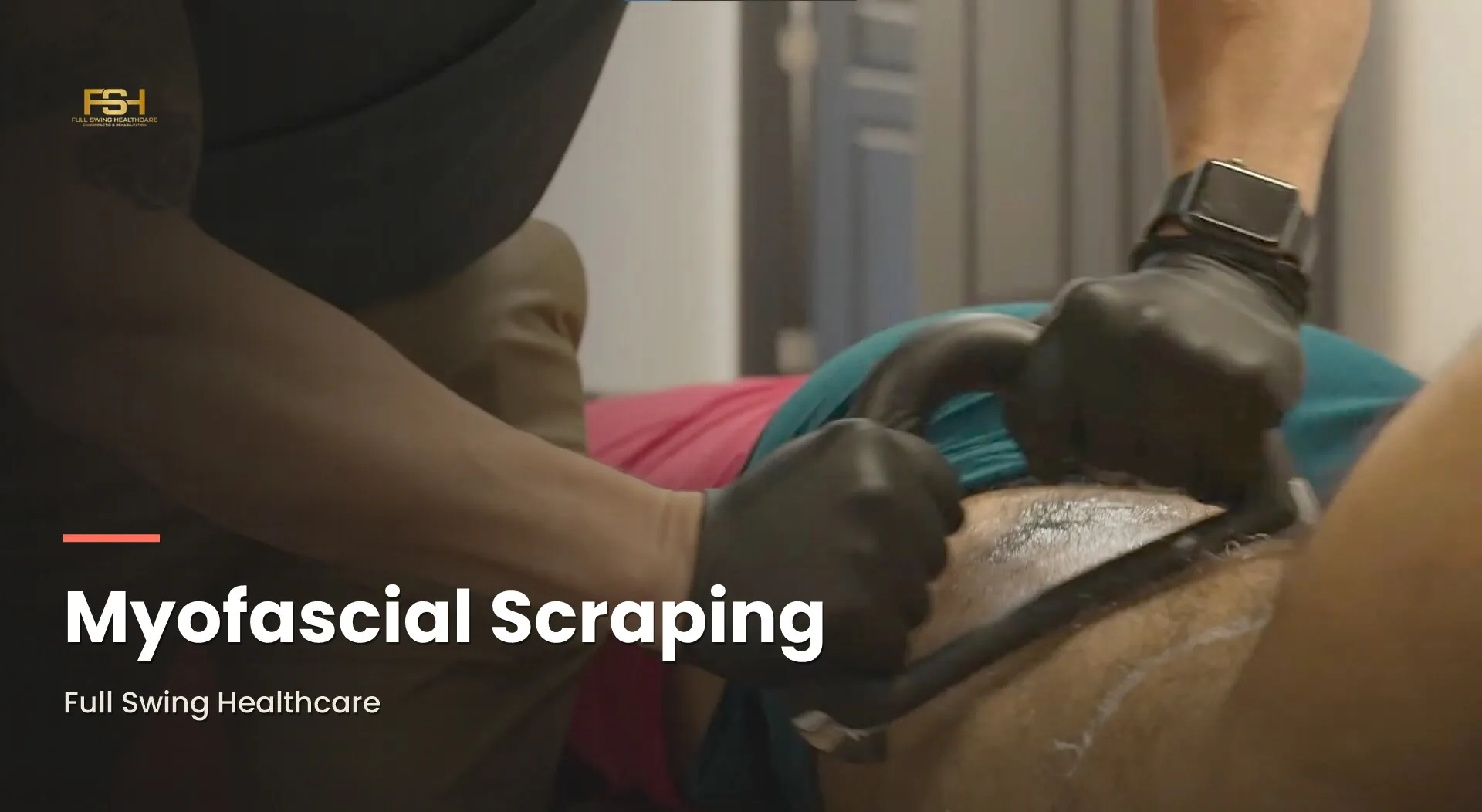
When a muscle keeps grabbing in the same spot no matter how much you stretch it, myofascial scraping in Jacksonville goes after the real culprit: the fascia and scar tissue knotted up around it, not the muscle. Myofascial scraping (also called IASTM, the Graston-style technique) uses a smooth steel tool to find those stuck spots and break the cycle, so you can finally move clean again and get back in full swing.
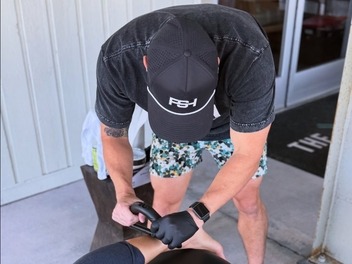
What myofascial scraping actually is
IASTM stands for instrument-assisted soft tissue mobilization, a mouthful for something simple. Your provider runs a contoured stainless-steel tool along the muscle and fascia with light oil or lotion. The edge catches on restrictions you can’t feel by hand: old scar tissue, fascial adhesions, and the gritty, ropey areas that form after an injury or years of overuse. Working those spots stimulates blood flow and a healing response, loosens the glide between tissue layers, and tells your nervous system to stop guarding the area.
It’s not magic, and it’s not a deep-tissue massage with a gadget. It’s a targeted tool that lets us feel and treat tissue restrictions more precisely than fingers alone, which is exactly why we assess first, map where you’re actually stuck, then scrape only what needs it.
The idea is older than the instruments. Scraping descends from gua sha, a technique practised in Chinese medicine for centuries using a smoothed stone, a jade edge or a spoon drawn across oiled skin. What modern IASTM changed is the tooling and the reasoning. The instruments are contoured stainless steel shaped to specific body regions, the treatment is aimed at a restriction found by examination rather than at a whole region, and the goal is described in terms of tissue glide, blood flow and how the nervous system responds. The redness that can follow has the same explanation in both traditions, small surface capillaries releasing under the stroke. Same lineage, different rationale.
You will also run into brand names, and it is worth knowing where we sit. Graston Technique is a trademarked system with its own instrument set and certification pathway. ASTYM is another, used mainly in physical therapy. We use neither. Our instruments are generic IASTM tools, which is also why we call it muscle scraping rather than a brand name. The mechanism is identical across all of them: a hard edged instrument used to find and work a tissue restriction that fingers cannot isolate. What decides your result is the assessment that locates the restriction and the loading you do afterwards to keep the tissue changing, not the logo stamped on the tool. Our Graston Technique page sets out that reasoning in full, including what the trademark actually covers.
Why the tool reaches what hands can’t
The steel instrument passes feedback through the skin that bare fingers can’t match. When it crosses a restriction, the feel changes to a gritty, grinding catch under the tool, and that is how your provider locates an adhesion precisely instead of guessing. Once it’s found, a controlled, sustained stroke works the stuck tissue and prompts your body to rebuild the area with healthier, better-organized tissue. That structural change is why the results tend to hold, rather than fading the way a good stretch does by the next morning.
What it helps
- Old scar tissue from surgery, sprains, or repeat injuries that never fully released
- Overuse and repetitive-strain spots: IT band, shins, forearms, Achilles, plantar fascia
- Stubborn muscle tightness that keeps coming back after stretching or rest
- Tendon and soft-tissue irritation in runners, surfers, golfers, and lifters
- Limited range of motion in the calves, hamstrings, shoulders, and hips
- Plantar fasciitis and chronic foot tightness that won’t quit
- Whiplash stiffness and lost neck rotation that linger months after a car accident
- Carpal tunnel symptoms driven by tight forearm flexors
The injuries we scrape most, and why it works
Scraping earns its keep on the overuse and scar-tissue problems we see every week at the beaches. A few of the most common:
Plantar fasciitis and Achilles pain
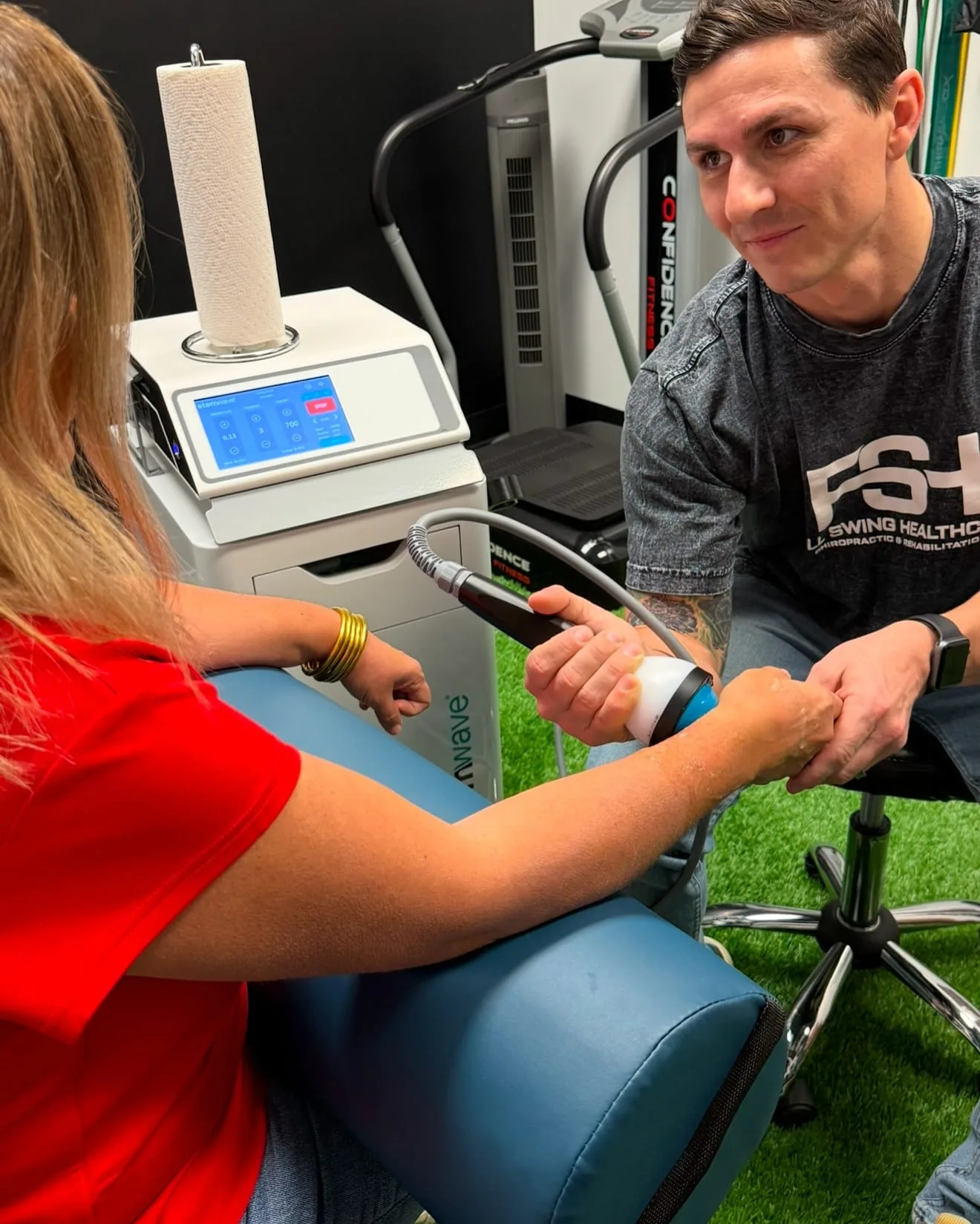
Chronic plantar fasciitis and Achilles trouble are stubborn because the tissue itself has broken down and reorganized poorly, so stretching and orthotics manage the load without changing the tissue. Scraping along the arch, the Achilles, and the calf works the degraded tissue mechanically and prompts the body to rebuild it. Jacksonville’s year-round activity, hard tile floors, and barefoot beach walking keep the plantar fascia under stress with no off-season, and scraping paired with shockwave therapy is one of the most reliable routes for heels that haven’t responded to rest.
Shin splints and lower-leg overuse
Runners who ramp up mileage fast load the front and inside of the shin harder than the tissue can recover from. Scraping the muscle and fascia along the shin eases the pull on the bone and improves how the tissue glides, calming the ache that flares every time you run.
IT band syndrome and lateral knee pain
The IT band is a thick sheet of connective tissue, not a muscle, so you can’t truly stretch it. The pain usually comes from it binding to the tissue underneath and compressing a sensitive spot on the outside of the knee. Scraping across the IT band and the outer thigh frees that glide and takes pressure off the knee. Runners logging miles on Jacksonville’s flat routes are the classic case.
Tennis elbow and forearm strain
Tennis elbow, golfer’s elbow, and general forearm tightness come from overloaded tendons and bound-up fascia in the forearm. Scraping the forearm and around the elbow addresses the tissue that keeps re-irritating with every grip, swing, or day at a keyboard, a practical fix when a brace only masks the problem. Carpal tunnel compression is often driven by the same fascial restriction in the forearm flexors, loading the carpal tunnel with every grip and keystroke.
Rotator cuff and shoulder restriction
Overhead athletes (swimmers, surfers, baseball players, golfers) build up adhesions in the shoulder that limit rotation and feed impingement. Scraping across the cuff tendons and the back of the shoulder breaks up those restrictions so that mobility work and strengthening actually take hold.
Post-surgical and old scar tissue
Scar tissue after surgery or an old injury forms in a disorganized web that binds to nearby tissue and steals the range of motion you’re trying to win back. Once the area has healed and your surgeon has cleared hands-on therapy, scraping works methodically along the scar to restore glide. Patients in rehab with us tend to regain motion faster with scraping in the mix than with exercise alone.
“For years I suffered with pain, swelling and stiffness in my feet and was told surgery was my only option. I’m so thankful I found a nonsurgical option that actually worked. Dr. Hall used myofascial scraping and at-home exercises that really made a difference.”
BT Brooke T.
Jacksonville
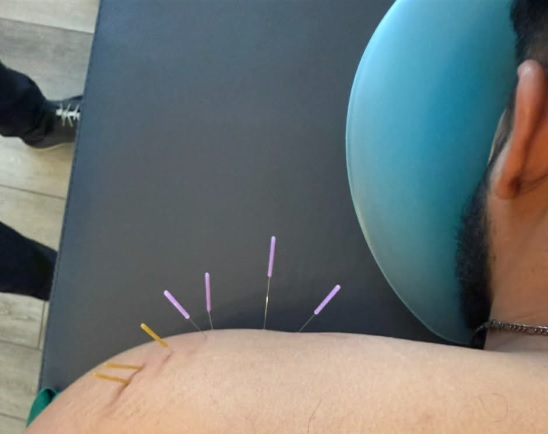
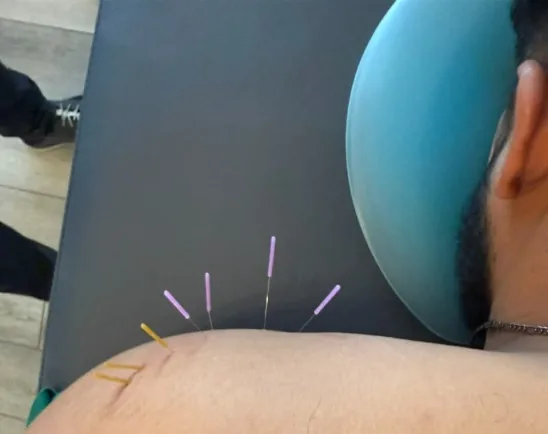
Pairs well with dry needling. Scraping frees up the fascia from the outside; dry needling resets the overworked muscle from the inside. Together they’re a one-two punch on the knots that keep coming back. We’ll build the right combination off your exam, not a default package.
$115 first visit, exam included
$70 per scraping session
Since 2017 treating the beaches
Your Jacksonville myofascial scraping clinic
Full Swing Healthcare sits at 13770 Beach Blvd #4, minutes from Jacksonville Beach, Neptune Beach, and Atlantic Beach, so instrument-assisted soft-tissue care stays close to home for the whole east side. Same-day appointments are often available, and because scraping, chiropractic, shockwave, and rehab all live under one roof, you can handle a combined visit in a single trip instead of driving all over town. We’ve kept the beaches’ runners, surfers, and golfers loose since 2017.

Who performs your scraping
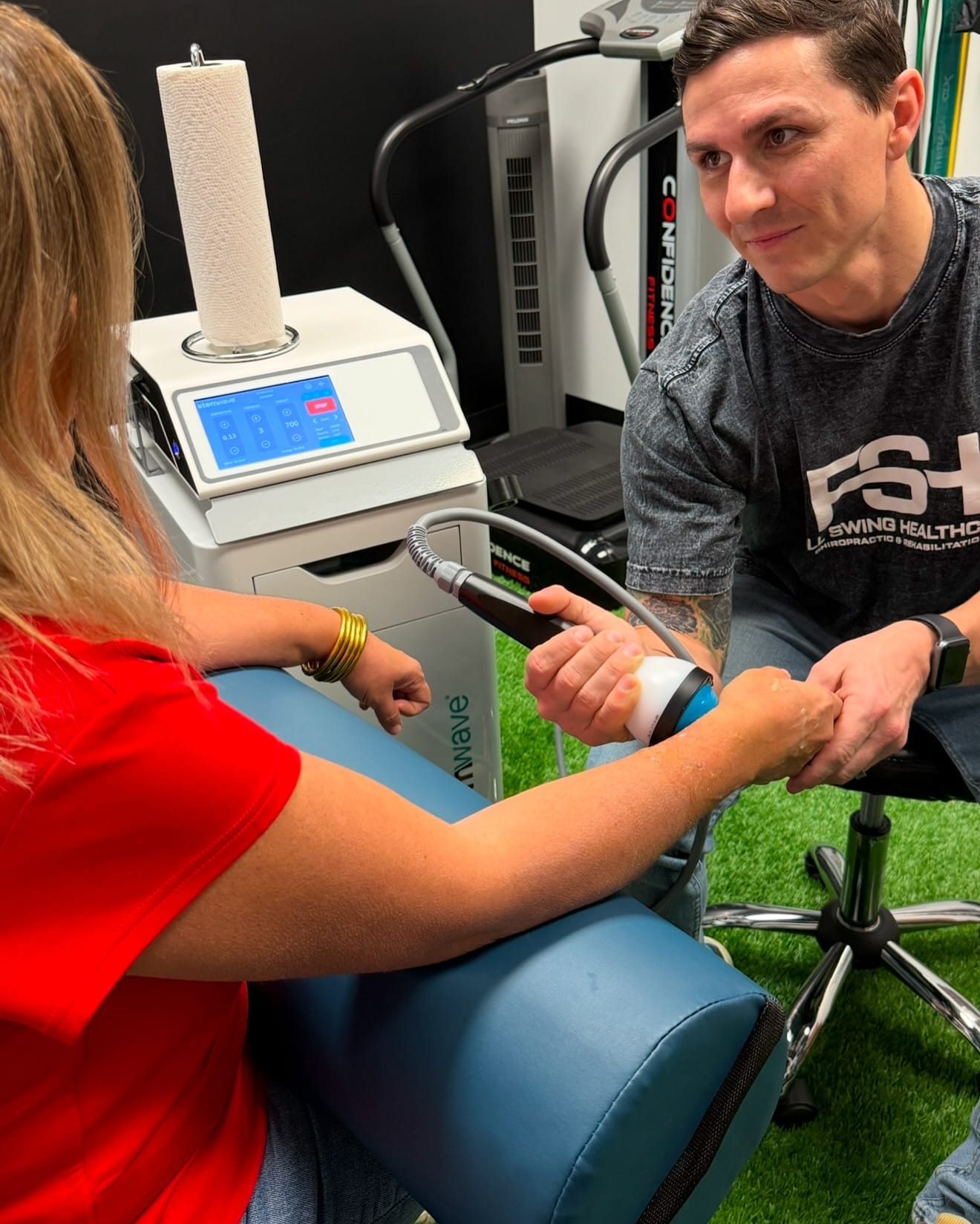
Your scraping is done by Dr. Cody Muren, DC, a Palmer College graduate (Florida license CH12412), or Dr. Eric Hall, DC. Both use IASTM as one layer inside a full plan rather than a stand-alone gimmick. For most patients that means loosening the superficial tissue with cupping or massage first, reaching the deeper adhesions with scraping, then finishing with the adjustment while the surrounding tissue is at its most receptive. For chronic tendon cases they’ll often add shockwave therapy to push the healing response further.
What to expect
Assessment first
We check your movement and pinpoint the restricted tissue before any tool touches you, no guessing, no one-size scrape.
The treatment
A few minutes of guided strokes over the target area. You’ll feel pressure and the occasional gritty catch as the tool finds adhesions. We dial the intensity to your comfort.
Move it
We often pair scraping with active movement or stretching while the tissue is freshly loosened, so the new range actually sticks.
Afterward
Mild redness or a little tenderness for a day or two is normal, it means blood flow is up and healing is on. It fades fast, and most people feel looser right away.
Scraping vs. what you’ve already tried
If you’ve been chasing the same tight spot for months, it usually isn’t because you weren’t trying hard enough. It’s because the tools you reached for don’t touch a fascial adhesion. Here’s the honest comparison:
Scraping vs. foam rolling
Foam rolling presses on tissue from the outside. It can calm the surface and boost circulation for a while, but it can’t reach the deeper fascia where most adhesions sit, and it can’t apply the pinpoint work that actually remodels stuck tissue. Rolling feels productive because pressure dulls the nerves. The adhesion is still there when you stand up.
Scraping vs. hands-on massage
Massage is excellent for releasing muscle guarding and easing trigger points. Its limit is feel: skilled hands find the general restriction, but the steel tool passes back feedback hands can’t, so the provider can pinpoint the exact edge of an adhesion. That gritty catch under the tool is the restriction itself, and it lets us work with more precision than fingers alone.
Scraping vs. stretching
Stretching lengthens muscle. A fascial adhesion isn’t muscle, it’s a structural bind between tissue layers, so pulling on it just lengthens everything around the stuck spot and the restriction snaps back the moment you let go. Scraping puts force directly on the adhesion and breaks it up, so the gain holds because the structure actually changed.
Pair it with
Myofascial scraping questions
Does myofascial scraping hurt?
You’ll feel firm pressure and an occasional gritty catch where the tissue is restricted, but it shouldn’t be painful. We adjust the intensity to your comfort, and most people describe it as a “good hurt” that leaves them feeling looser.
Will it leave bruises like cupping does?
Sometimes you’ll see mild redness or light bruising over the treated area for a day or two. That’s increased blood flow doing its job. It’s usually much lighter than cupping marks and clears quickly.
How is scraping different from a massage?
A steel tool lets us feel and treat fascial adhesions and scar tissue with more precision than hands alone. It’s targeted soft-tissue work for specific restrictions, not a full-body relaxation massage.
How many sessions will I need?
It depends on what we find at your exam. Some overuse spots loosen in one or two visits; older scar tissue takes a short series, often two or three sessions before you notice a real change. We’ll lay out a realistic plan after assessing you. Call (904) 539-3352 to get started.
Do you take my insurance for this?
We accept Florida Blue, United Healthcare, Humana, Cigna, Florida Medicaid, and VA, plus straightforward self-pay at $115 for your first visit (exam included) and $70 per scraping session. We’re at 13770 Beach Blvd #4, Jacksonville, FL 32224.